
Keuka is not a straight-line lake. Its two northern arms meet near Bluff Point and continue south toward Hammondsport, making every route choice look like a chance to see one more shoreline. That geometry is exactly why a first family day should be deliberately incomplete. Keuka Lake State Park gives a trailer crew a practical west-branch base; the day works when the operator keeps an easy return, treats dockage and shore stops as optional, and refuses to chase all three ends of the lake.
The one-branch plan at a glance
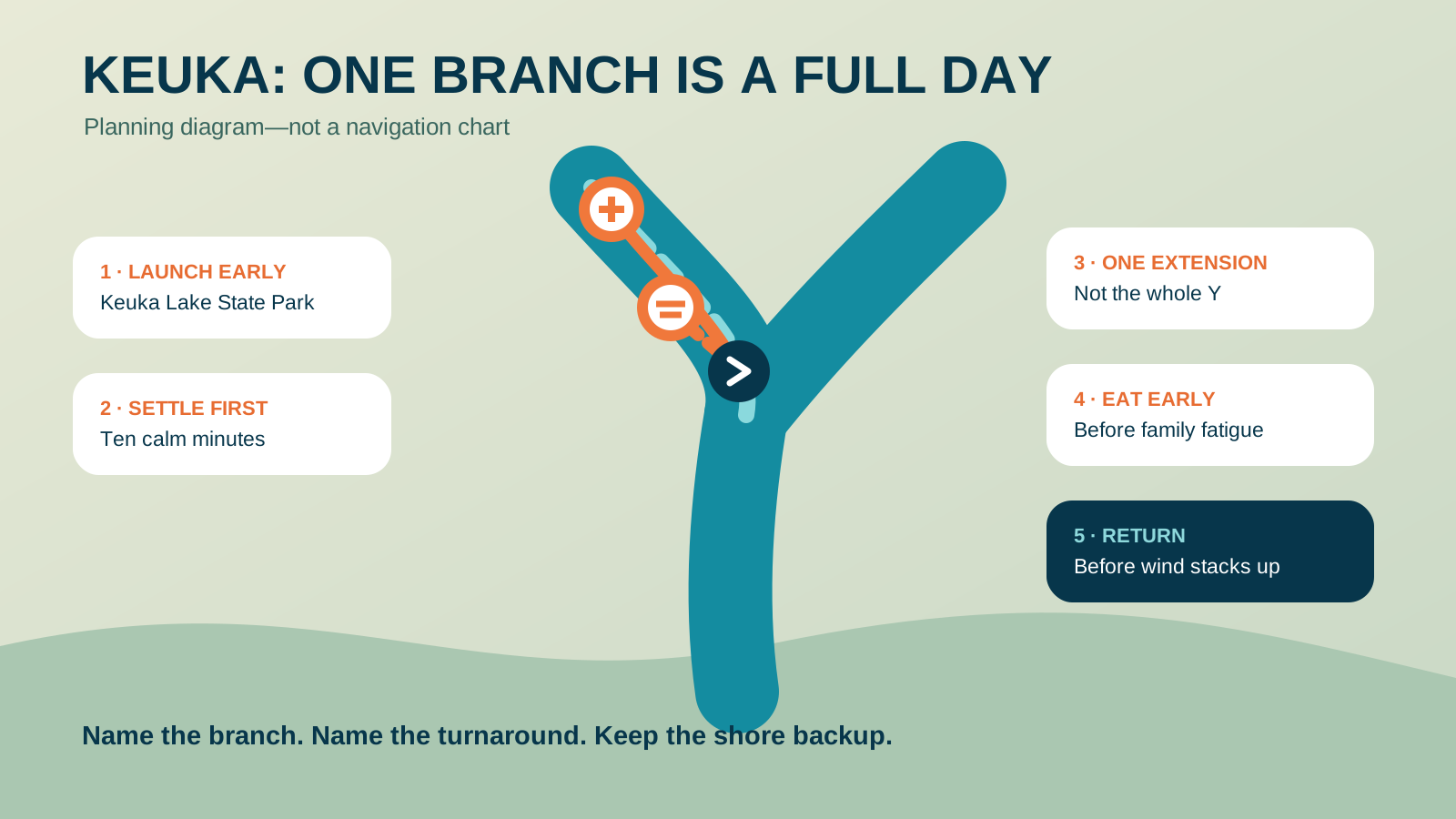
The planning visual below shows the restraint that makes the day work: use the state park as the base, choose one branch and return before the Y turns into a mileage target. It is not a navigation chart; use current charts, markers, weather and posted directions.
Use the state park as the default family base
New York State Parks currently lists Keuka Lake State Park at 3560 Pepper Road, Bluff Point, open year-round from dawn to dusk. The park publishes a boat launch, dockage, playground, showers, hiking, campsites and pavilions. The statewide launch table describes a hard-surface ramp with parking for 50 cars and trailers and a pumpout. That is a more forgiving first-family setup than the Penn Yan village launch, which the same table lists at only six cars.
For 2026, the park publishes an $8 vehicle entry fee collected in seasonal windows and daily from June 19 through September 7, with marina operation from May 15 through October 12. Fees, staffing, water level and dock availability remain volatile. Check the official park page and call the office before towing. Do not assume an Empire Pass, campsite or pavilion reservation automatically solves every boat, trailer or slip fee.
Campers need the separate boat rule: the park says boats and trailers are not permitted on the campsite. They go in the main parking lot or a rented marina slip. Reserve and confirm that arrangement rather than discovering it after the campsite is set.
The route: one branch, one meal, one easy return
Hour zero: arrive early. Rig away from the ramp, fit life jackets before anyone reaches the dock and keep one adult responsible for children while the operator handles the trailer. Use the ramp checklist before entering the launch lane.
Hour one: settle into the west branch. Clear the launch at no-wake speed, establish the boat's normal operating condition and make a short run in water supported by current navigation information. The first objective is not Bluff Point or Hammondsport. It is ten calm minutes with every passenger comfortable and every system behaving normally.
Hour two: choose the day's single extension. Continue only while the return remains shorter than the crew's patience and the weather margin. Do not round the point simply to claim another branch. Private shoreline, docks and vineyard views are scenery, not public access.
Hour three: eat before fatigue. Use a legal, safe shore stop or a calm-water plan appropriate to the boat. If dockage is full or wind makes it awkward, eat aboard only when the operator can remain undistracted. Then return while the ramp and family are still manageable.
Keuka's Y is a route decision, not a navigation shortcut
DEC identifies Keuka as an 11,712-acre Finger Lake. Its branching shape changes fetch, wind exposure and the apparent distance home. A breeze aligned with one arm can produce a different ride after the junction. Shoreline geography also creates the false comfort of always being near land; being close to a private shore does not create a safe landing or public refuge.
This guide is not a chart. Use current official navigation information, keep a proper lookout and obey markers and local restrictions. Water depth, submerged objects, weeds and temporary controls can change. Never follow another boat as proof of safe depth for your draft or running gear.
Weather: read the branch, not the picnic table
Use the National Weather Service point forecast near Keuka Park as a baseline, then compare it with conditions at the ramp. The forecast point is on land and does not promise identical wind or wave conditions everywhere on the lake. Check wind direction, gusts, thunderstorm timing, temperature and visibility; then ask how that wind lines up with the chosen arm and the launch dock.
Cancel when thunderstorms are possible during the operating window, when the operator cannot handle the forecast crosswind at the ramp, when visibility is poor or when a cold-air day creates an unacceptable cold-water recovery problem. If thunder is heard, leave exposed water and follow current NWS lightning guidance. Do not wait for rain.
The return begins with the first material change, not the second: a rising headwind, a child becoming cold, a warning alarm, uncertain visibility or a busier-than-expected route. A family plan that needs perfect conditions all afternoon is not conservative.
Food, restrooms, dockage and the swimming question
The state park publishes showers, playgrounds and marina dockage, but it does not guarantee that every amenity or restroom is open in every season. Confirm current operations. Bring drinking water, lunch and two simple snacks even if a shore meal is planned. A restaurant or transient dock is an optional upgrade, not the survival layer.
Swimming requires a separate decision. Confirm where it is legal, check current water-quality notices, keep the boat out of traffic, control propulsion, and verify that every swimmer can reboard using the boat's actual ladder. The park page does not currently advertise a guarded swimming beach. Do not convert a dock or launch lane into a swim platform. Skipping the swim is the right answer when reboarding, traffic or water temperature is uncertain.
Pets are limited to two in day-use and camping areas, must be supervised and leashed no longer than six feet, and are excluded from specified facilities. Bring proof of rabies vaccination if taking a dog, and confirm whether the exact dock and boat setup works for the animal.
What to pack and where it goes
New York requires boats and associated equipment to arrive clean, drained and dry or treated before launching into public water. Inspect bunks, axle, prop, livewell and bilge before the ramp, then repeat after retrieval. Keep the cooler and tool bag secured so neither blocks safety equipment or changes footing.
The shore backup is already at the launch
Ramp or weather problem: Keep the boat on the trailer. The park publishes hiking trails, playgrounds and picnic infrastructure, subject to current operations. A shore day is not a consolation prize when it avoids a rushed launch.
Boat problem: A fuel smell, steering fault, repeated fuse opening, weak battery, warning alarm or unexplained bilge water ends the launch. Follow the exact manuals or use a qualified marine technician. Do not let a long tow justify a short unsafe loop.
Kid problem: Feed first, shade or warm second, reduce motion third. If the child still wants off, return. Do not add the east branch because the first two hours went well.
Parking problem: Do not block approach roads or improvise trailer parking. Leave for a legal staging area and contact the park. The tiny Penn Yan launch is not an automatic overflow plan.
Cost, booking and accessibility questions
Budget the published vehicle fee, fuel, food and any marina or overnight slip charge. The park currently publishes transient slips at $14–$17 per night during the 2026 marina season, but a day-use crew should confirm whether short-term tie-up exists and what rules apply. Never plan on an unconfirmed slip.
The park lists accessible showers and pavilion facilities, but that does not establish an accessible boat-transfer system at the ramp. Contact the park at the official number and describe the required transfer, boarding, restroom and parking support. “Accessible launch” can refer to approach or fishing access rather than a boarding lift.
Commercial launching requires a permit, and fishing tournaments require a separate permit. Ordinary family boating does not become commercial because fuel or food was purchased, but hired operators and organized events must resolve permits before arrival.
Who should go—and who should choose another day
Keuka Lake State Park fits a family with a known trailerable boat, an operator comfortable with a hard-surface ramp, an early start and enough restraint to explore one branch. It works especially well when the group values scenery, a short cruise and a shore backup more than a packed destination list.
Skip it when the crew needs guaranteed swimming, confirmed restaurant dockage, an all-weather route or an accessible transfer that has not been verified. First-time trailer operators should practice at a forgiving ramp with an experienced helper before turning a popular Finger Lakes park into the classroom.
After retrieval, log arrival time, ramp pressure, wind by branch, route duration, passenger energy, fuel use and recovery difficulty. That record tells you whether the next Keuka day should reach the junction. A generic review cannot.
Frequently asked questions
Where should a family launch on Keuka Lake?
Keuka Lake State Park is the strongest first-day default because the state publishes a hard-surface ramp, parking for 50 cars and trailers, dockage and shore amenities. Confirm current operations before towing.
How much is the Keuka Lake State Park launch?
The park currently publishes an $8 vehicle-entry fee during 2026 collection periods. Fees and collection schedules can change, so verify the official park page before departure.
Can boats and trailers stay at a Keuka Lake State Park campsite?
No. The park states that boats and trailers are not permitted on the campsite; they must be left in the main parking lot or placed in a rented marina slip.
Does Keuka Lake State Park have a swimming beach?
The current park amenities page does not advertise a guarded swimming beach. Confirm current rules and water quality and never swim from the launch or dock lane.
Should a first family trip cover all of Keuka Lake?
No. Choose one branch, set a time-based turnaround and preserve an easy return. The lake's Y shape can turn an optional extension into a long ride home.