
Editorial disclosure: This guide builds a boat-specific tool system from manufacturer documentation and realistic onboard jobs. It does not claim hands-on product testing. Retail links may be affiliate links that support Nautical Dream without changing the price you pay. Tool fit, fastener sizes and service limits vary by engine and boat; confirm every choice against the exact owner and service manuals.
Affiliate disclosure: Nautical Dream may earn a commission from qualifying purchases made through marked retail links, at no additional cost to you. Recommendations remain editorially independent. As an Amazon Associate I earn from qualifying purchases.
A generic mechanic's assortment looks reassuring until the one socket aboard does not fit the prop hardware, the pliers are rusted shut and the flashlight is buried beneath oily spares. A useful boat tool kit starts with the jobs the manuals actually permit, the fasteners physically installed and the consequences of getting the repair wrong. It is a field-support system, not permission to become the marina's least-qualified technician.
Use the layout to audit the case
The diagram below groups tools by the jobs they support and keeps boat-specific spares separate. Use it after inventorying the actual fasteners and procedures aboard; it is not a universal shopping list and it does not authorize repairs beyond the operator's competence.
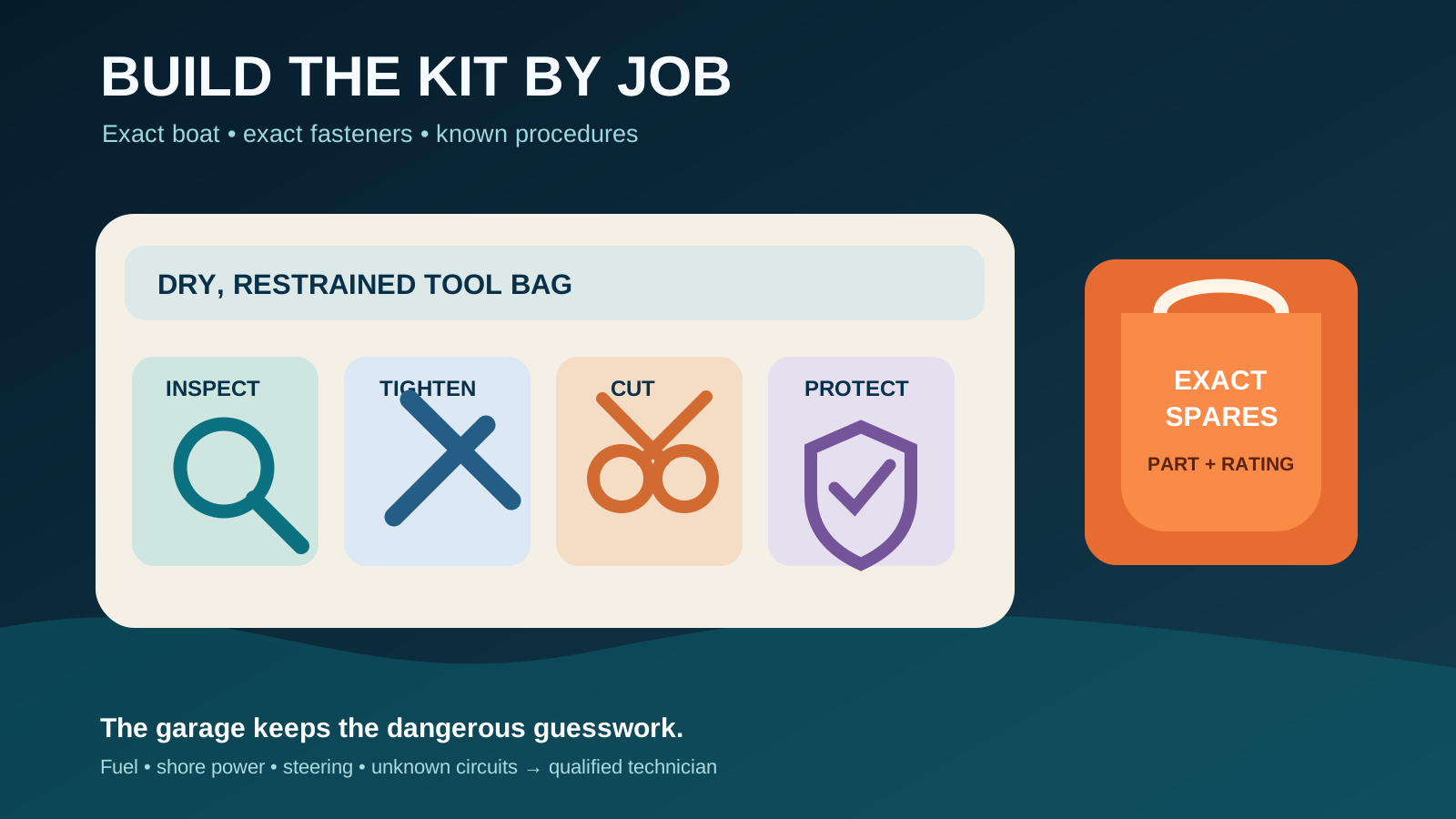
The fifteen-minute inventory before you buy anything
Open the manuals for the engine, drive, batteries, steering, electronics and any accessory that can strand the boat. Mercury's owner-resource desk, for example, locates the correct engine manual by serial number and directs service work beyond the owner procedures to an authorized dealer. Make a two-column list: owner-authorized checks and technician work. The kit supports the first column only.
Next, walk the boat while it is secure ashore. Record the actual sizes and types of accessible fasteners involved in simple owner checks: battery-box straps, removable panels, propeller hardware if the manual provides an owner procedure, hose-clamp inspections, canvas hardware and trailer fittings. Photograph labels and part numbers. Do not remove guards or energize systems merely to complete the inventory.
The result should be a short compatibility card kept in the kit: engine model and serial, prop-hardware sizes and procedure reference, battery-terminal tool size, common panel fasteners, required spare fuses by exact type and rating, and the dealer or tow number. That card is more valuable than twelve mystery sockets.
Choose the container before the tools
A hard metal toolbox is often the wrong default aboard a small boat. It can slide, damage finishes, corrode and turn into a heavy projectile. A compact zippered or roll-style bag with a bright interior makes missing tools visible and fits into a restrained, dry location. The bag still needs a secondary moisture barrier; “water-resistant” is not permission to store it in a wet bilge.
Measure the locker, the opening and the restraint point before ordering. Keep the kit away from batteries, fuel-system components, engine belts, hot surfaces and required safety equipment. A tool bag must never bury a fire extinguisher, throwable device or emergency shutoff. Add a simple inventory card and one small absorbent cloth; loose oily rags do not belong in the kit.
The core set: inspect, grip, turn and cut
| Tool group | Why it earns space | Compatibility check | What not to do |
|---|---|---|---|
| Manual-specific sockets and wrenches | Known fasteners without adjustable-jaw damage | Exact metric/SAE size and drive | Force an almost-fitting tool |
| Screwdrivers and bits | Panels, clamps and accessory fasteners | Tip profile and reach | Use as pry bars |
| Pliers and cutters | Grip small parts and clear fouled line when safe | Jaw type, cutting capacity and corrosion resistance | Cut energized wiring |
| Inspection light and mirror | Find leaks, loose items and labels before touching | Battery plan and safe use around fuel spaces | Use a hot or sparking light where prohibited |
Buy individual tools when that produces a smaller, better-fitting set. A compact socket-and-wrench assortment can make sense if most pieces match installed fasteners; otherwise it is paid ballast. Insulated-handled screwdrivers are not a license for live electrical work, and consumer markings do not substitute for the procedure, de-energization and qualification a job requires.
Boat-matched socket and wrench set
Choose the measurement system, drive size and sockets after the fastener inventory.
Check current priceCorrosion-resistant pliers and cutters
Confirm cutting capacity and keep a sheath over sharp edges.
Check current priceTools and spares are different inventories
A screwdriver cannot replace a blown fuse, and a random fuse assortment is dangerous when nobody knows the specified rating. Build a separate, labeled spares pouch from the manuals: exact fuses, permitted bulbs, a boat-specific drain plug, manufacturer-specified prop hardware where appropriate, cable ties for organization rather than permanent repair, and other consumables explicitly supported by the boat's procedures.
Keep every electrical spare in its marked packaging. Never increase a fuse rating to stop repeated opening; the fault needs diagnosis. Keep fluids in their original sealed containers and segregated from the tool bag. Fuel-system parts, ignition-protected components and pressurized steering parts are not universal spares. Compatibility must be proven by part number or current manufacturer documentation.
Log anything used. A spare consumed on the water becomes a shore-side replacement task before the next launch. The second occurrence of the same failure is not proof that the spare strategy works; it is evidence that the underlying problem needs attention.
Add only job-specific modules
Trailer module: the tow vehicle's correct lug tool, torque wrench for shore-side verification, tire-pressure gauge, wheel chocks and manufacturer-compatible jack plan. Do not attempt roadside work without a safe location and adequate support.
Prop module: only when the exact engine manual provides an owner procedure. Pack the specified wrench or socket, block method, grease, thrust hardware and replacement retaining parts. Never improvise a prop removal while the engine can start, the boat is unstable or the procedure is uncertain.
Electronics module: spare manufacturer-approved fuses, a nonconductive inspection light and documentation. Diagnosis of energized circuits, shore power, battery banks or ignition-protected systems belongs with qualified personnel unless the manual gives the owner a specific safe check.
Canvas and comfort module: correct bits for removable hardware, a small tape measure and documented replacement fasteners. This is where a compact bit driver earns its place; it should not migrate into steering or structural repairs.
The no-DIY boundary
Stop when the repair touches fuel leaks or vapors, shore power, unknown wiring, high-current battery cables, steering integrity, structural damage, pressurized systems, fire damage, critical engine alarms or any procedure the manufacturer assigns to a dealer or trained technician. Do not bypass an alarm, interlock, fuse, breaker or ventilation requirement to get home.
Tools do not reduce the risk of a moving boat. Before any permitted minor work, secure the boat, shut down propulsion, remove keys or use the documented lockout, control hot surfaces, keep passengers clear and communicate the plan. On the water, the safer answer may be anchoring where appropriate, issuing a radio call, or arranging assistance rather than opening the machinery space.
Corrosion control without coating every tool in mystery oil
Dry tools before storage, wipe away salt and inspect hinges, cutters and ratchets. Use corrosion protection that is compatible with the tool maker's instructions and does not contaminate electrical contacts, belts, flotation equipment or food-storage areas. A small desiccant pack can help in a closed secondary bag, but it does not correct an actively wet locker.
At the end of each month in season, empty the bag onto a light-colored surface. Open every moving joint, confirm that sharp tools remain sheathed, replace damaged insulation and remove rusted pieces from service. Inventory against the card. A missing wrench probably means it is loose somewhere aboard; find it before it reaches a bilge pump, belt or battery terminal.
What not to buy
- A huge automotive kit with mostly unmatched sizes and no secure storage plan.
- Unmarked bargain electrical spares or a mixed fuse assortment used without exact ratings.
- A multi-tool expected to replace the correct prop, battery or panel tool.
- Loose razor blades, uncovered cutters or heavy tools that cannot be restrained.
- Test equipment you are not trained to use on the boat's system.
- “Marine” tools selected by color or coating claims without fit, warranty or care information.
Skip the purchase if the boat is used only on protected water with immediate shore support and the operator will not perform any manual-authorized work. In that case, documentation, communication, towing coverage and a minimal inspection light may be more valuable than a full kit.
The finished-kit audit
Pair the kit with the boat records system, predeparture checklist and no-DIY decision guide. The tool bag should make small, known jobs easier. It should never make a serious fault look casual.
Frequently asked questions
What tools should every boat carry?
There is no universal set beyond a few inspection and gripping basics. Start with the exact manuals and installed fasteners, then pack only tools for owner-authorized checks and repairs you can perform safely.
Should a boat tool kit use metric or SAE tools?
Use whatever the actual engine, boat, trailer and accessories require. Many boats contain both. Verify fasteners instead of assuming one system from the engine brand.
Can I keep a multimeter in the boat tool kit?
Only if you are trained to use it on the exact system and the manufacturer provides a safe diagnostic procedure. Unknown wiring, shore power and high-current circuits call for a qualified marine technician.
How do I keep boat tools from rusting?
Store clean, dry tools in a restrained secondary moisture barrier, inspect moving joints monthly and use only compatible corrosion protection. Fix the wet locker rather than depending on coatings.
Is a large mechanic's set better value?
Not when most pieces do not match the boat or the case cannot be secured. A smaller boat-specific kit is easier to inspect, carry and use without burying essential safety equipment.