
Otisco Lake is the most easterly Finger Lake and lies entirely in Onondaga County. It is only 5.4 miles long, but that does not make the public trip frictionless. The DEC launch has published capacity for 13 tow vehicles and trailers. Church Hill Road remains closed on the direct approach. The public access is for launching, retrieval and fishing—not swimming, camping or a picnic-day base. A good family plan treats the ramp as a narrow doorway, brings every meal and restroom contingency, and keeps the boat within an easy return while the crew learns the lake.
Keep the planning map in its proper role
The visual sequence below is a logistics reminder, not a navigation chart. Use it to solve the road closure, small launch and early return before towing; use current navigation information, posted markers and observed conditions on the water.
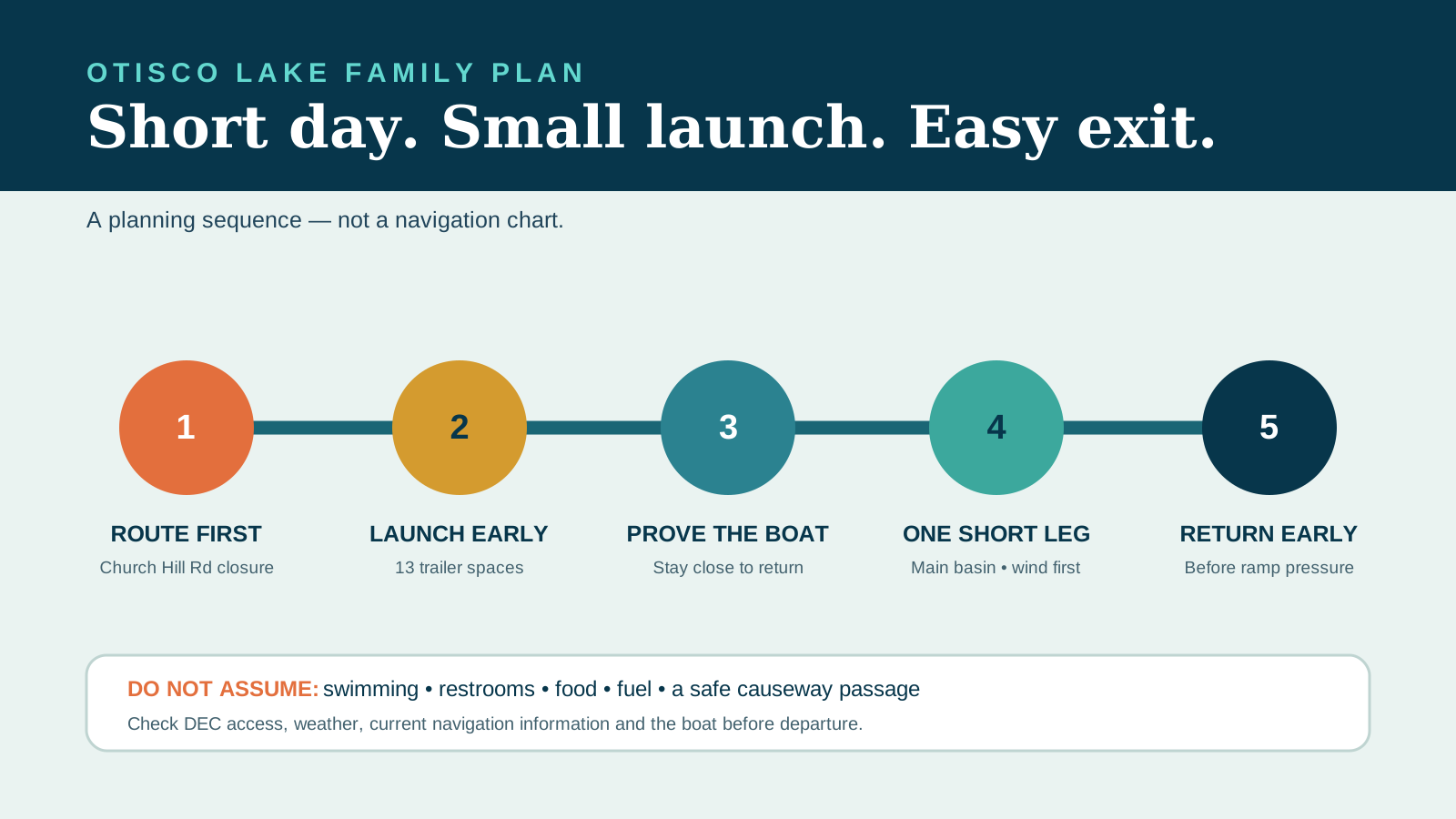
The day in one decision table
This is not a “see the whole lake” itinerary. It is a four-hour proof day that can expand only while the weather, boat and family remain boring. The DEC describes a clear main basin north of the causeway and a much shallower, turbid southern basin. An unfamiliar family crew has no reason to make the causeway or southern water the objective.
| Decision | Green light | Yellow light | Stop |
|---|---|---|---|
| Arrival | Early, correct road approach, open trailer space | Queue forming or crew still packing | No legal parking or unsafe ramp pressure |
| Weather | Stable forecast and easy return shore | Building wind or thunder risk later | Thunder heard, warning active or return becoming difficult |
| Route | Short main-basin leg with known position | Weeds, depth uncertainty or rising traffic | Unfamiliar shallow/causeway commitment |
| Family | Fed, warm, shaded and engaged | One kid fading or adult workload rising | Two problems at once |
Solve the road closure before hitching the trailer
DEC's current Otisco Lake page says Church Hill Road is permanently closed between Stanton Road and West Valley Road. It directs drivers to reach West Valley Road from Sawmill Road using Moon Hill Road/Masters Road or Otisco Valley Road. Put the official launch location—1490 West Valley Road, Spafford—into the route, then compare the route against the current DEC notice. Do not let a navigation app pull a trailer into a closure or an awkward turnaround.
A trailer route needs more margin than a car route. Check road restrictions, low branches, turning space and fuel before departure. If the alternate approach is unfamiliar, drive it without the trailer on another day or examine the full route before the family is loaded. Tell the second adult the final turn sequence so the driver is not reading a phone while watching mirrors.
Otisco Lake Park at the south end is not the trailer launch. The county describes that park as a small, carry-in/carry-out shore-access property with five-car parking and no swimming. Keep the park and the DEC West Valley Road ramp separate in the plan.
The 13-space launch changes the schedule
The West Valley Road site is a hard-surface launch with published parking for 13 cars and trailers. DEC marks the site accessible, but that designation does not promise an accessible boarding dock or assistance for every transfer. Contact DEC Region 7 if a passenger needs specific boarding support.
Arrive early enough that an unavailable parking space does not create a bad decision. If the legal trailer spaces are full, use the fallback: leave and do the shore day elsewhere. Do not invent parking along a narrow road, block turning movements or detach the trailer to squeeze into a car space. Stage straps, plug, lines and life jackets before occupying the ramp. One adult handles the tow vehicle; the other keeps children out of the traffic path and away from the water until boarding is controlled.
The four-hour family itinerary
Hour one: launch and prove the boat. Stay close enough that a forgotten item, warning light, seasick passenger or steering issue means minutes—not miles—to the trailer. Confirm cooling-water flow, bilge condition, battery voltage, fuel range, communications and the depth sounder before committing.
Hour two: one short main-basin leg. Choose direction from the actual wind and the easiest return, not from a desire to reach the far end. Maintain a safe distance from shore, docks, anglers and other boats while using current navigation information. The lake's narrow width does not eliminate wind, traffic or submerged hazards.
Hour three: eat before the crash. Stop only where anchoring or drifting is legal and safe for the boat and conditions. If no clearly suitable location exists, eat underway only when the operator can remain undistracted or return to the ramp area. There is no public-beach requirement in this plan.
Hour four: turn home while everyone still likes boating. Recover before afternoon weather, fatigue and ramp traffic stack together. The win is a clean launch, one good stretch of water and a calm retrieval.
Treat the causeway and southern basin as a boundary, not a prize
DEC says the causeway divides Otisco into two distinct basins. The main lake north of it has a reported mean depth of 34 feet; the smaller southern basin averages about 6 feet and is extremely turbid. Weed concentrations are greatest at the north end, with additional weeds near the south end north of the causeway and in Turtle Bay.
Those lake-wide facts do not identify a safe line for your boat. Water level, vegetation, debris and local markers can change. This guide is not a chart and does not recommend attempting the causeway passage. Use current official navigation information, the boat's depth sounder and a conservative speed. Never assume another boat's track is safe for your draft, outdrive or propeller.
When depth becomes uncertain, slow early while retaining steerage and a safe route away from traffic. Do not send a passenger onto the bow to “look for bottom” while moving. If the operator cannot explain the next safe water in plain language, reverse the route before the choices narrow.
Food, restroom and swimming logistics
The DEC access rules limit the fishing site to launching, retrieving and shore fishing; swimming, camping and fire building are prohibited. The county's Otisco Lake Park also says swimming is not allowed. Do not market either public property to the kids as a beach. If swimming from the boat is contemplated elsewhere, first confirm that it is legal, the water and traffic conditions are appropriate, the boat has a reliable reboarding method, and the operator can keep propulsion safely controlled. Skipping the swim is a sound default.
DEC's launch listing does not promise food, fuel or restrooms. Treat all three as unavailable unless the managing agency confirms otherwise. Every passenger uses a restroom before the final approach. Bring drinking water, an early lunch, simple snacks, sun protection, warm layers and a carry-out trash bag. A legal, sanitary marine toilet solution depends on the boat and must be handled without discharge.
Pack food where it cannot bury the throwable, first-aid kit or fire extinguisher. For a family boat, the cooler is part of the stability and access plan, not loose furniture.
Weather and the no-argument turnaround
Check the National Weather Service point forecast before departure, then compare it with what the lake is actually doing. A general Syracuse forecast is not a boat forecast. Wind direction relative to the ramp matters: an easy departure can become a difficult retrieval when an afternoon breeze presses the boat off the dock or across the ramp.
Build the cancellation rule before the family gets excited. No launch when thunderstorms are expected during the planned window, when the boat cannot be handled at the ramp wind, when visibility is poor, or when the operator is relying on “it should pass.” If thunder is heard, get off exposed water and follow current NWS safety guidance; do not wait for rain to prove the storm is close.
What to pack—and where it goes
New York requires boats and associated equipment to be clean, drained and dried or treated before launching into public water. Arrive without aquatic plants or standing water, and repeat the process after retrieval.
The shore-day and meltdown backups
Ramp full: Do not wait with children wandering through trailer traffic. Leave, eat the packed lunch at a legal location and convert the outing to a short park or scenic drive. Otisco Lake Park is open dawn to dusk, but it has only five-car parking, is carry-in/carry-out and does not allow swimming. Confirm its status before using it.
Boat problem: Stay on the trailer. A warning alarm, fuel smell, steering problem, weak battery or unknown bilge water is not improved by “just a short loop.” Diagnose according to the boat and engine manuals or use a qualified marine technician.
Kid problem: Feed first, shade second, reduce motion third. If the child still wants off the boat, return. Do not extend the trip because launching took effort.
Weather problem: Cancel before towing into the valley if the planned window is gone. The backup does not need to be another water activity. A successful family boating system protects enthusiasm for the next trip.
Who should go—and who should choose another lake
Otisco fits a prepared local crew with a trailerable boat, an early schedule, low amenity needs and a willingness to keep the route short. It is a good proof day for a boat whose systems are already known, and for children who can enjoy the ride without needing a beach destination.
Choose another plan when the group needs guaranteed restrooms, food, swimming, a large parking field or a full-service marina. Pause when the road approach is uncertain, when a passenger requires boarding assistance that has not been confirmed, or when the operator is not comfortable recovering at a small ramp in wind. First-time trailer operators should practice launching and retrieval at a forgiving facility with an experienced helper before making a 13-space site the family classroom.
After the trip, log launch arrival, wind, parking pressure, actual route time, fuel use, kid energy and retrieval difficulty. That record—not a generic lake review—tells you whether the next Otisco day can be longer.
Frequently asked questions
Where is the public Otisco Lake boat launch?
The DEC hard-surface launch is at 1490 West Valley Road in Spafford. DEC currently publishes parking for 13 cars and trailers and warns that Church Hill Road is permanently closed between Stanton Road and West Valley Road.
Can families swim at the Otisco Lake public launch?
No. DEC limits the fishing access site to launching, retrieving and shore fishing and prohibits swimming. Onondaga County also states that swimming is not allowed at Otisco Lake Park.
Does the Otisco Lake launch have restrooms or food?
The current DEC launch listing does not promise either. Plan as if food, fuel and restrooms are unavailable unless the managing agency confirms otherwise before departure.
Is the Otisco Lake launch accessible?
DEC marks the hard-surface launch accessible, but its general definition may refer to access to the top of the ramp and associated amenities rather than a guaranteed accessible boarding dock. Contact DEC Region 7 for the exact transfer support needed.
Should a first family trip go south of the causeway?
This guide does not recommend it. DEC describes the southern basin as shallow and turbid. An unfamiliar crew should use current navigation information and keep the first route in known main-basin water with an easy return.