
The Blenheim-Gilboa Lower Reservoir is not a casual roll-through launch. Its 2026 reopening comes with a clear operating sequence: report to Mine Kill State Park, wash the boat with the park's hot-water station before entering, sign in, leave the water one hour before the park closes and wash again on exit. That structure is an advantage if the crew accepts it. The right family day is short, reversible and built around the decontamination queue rather than squeezing every minute from the reservoir.
The wash-and-return sequence
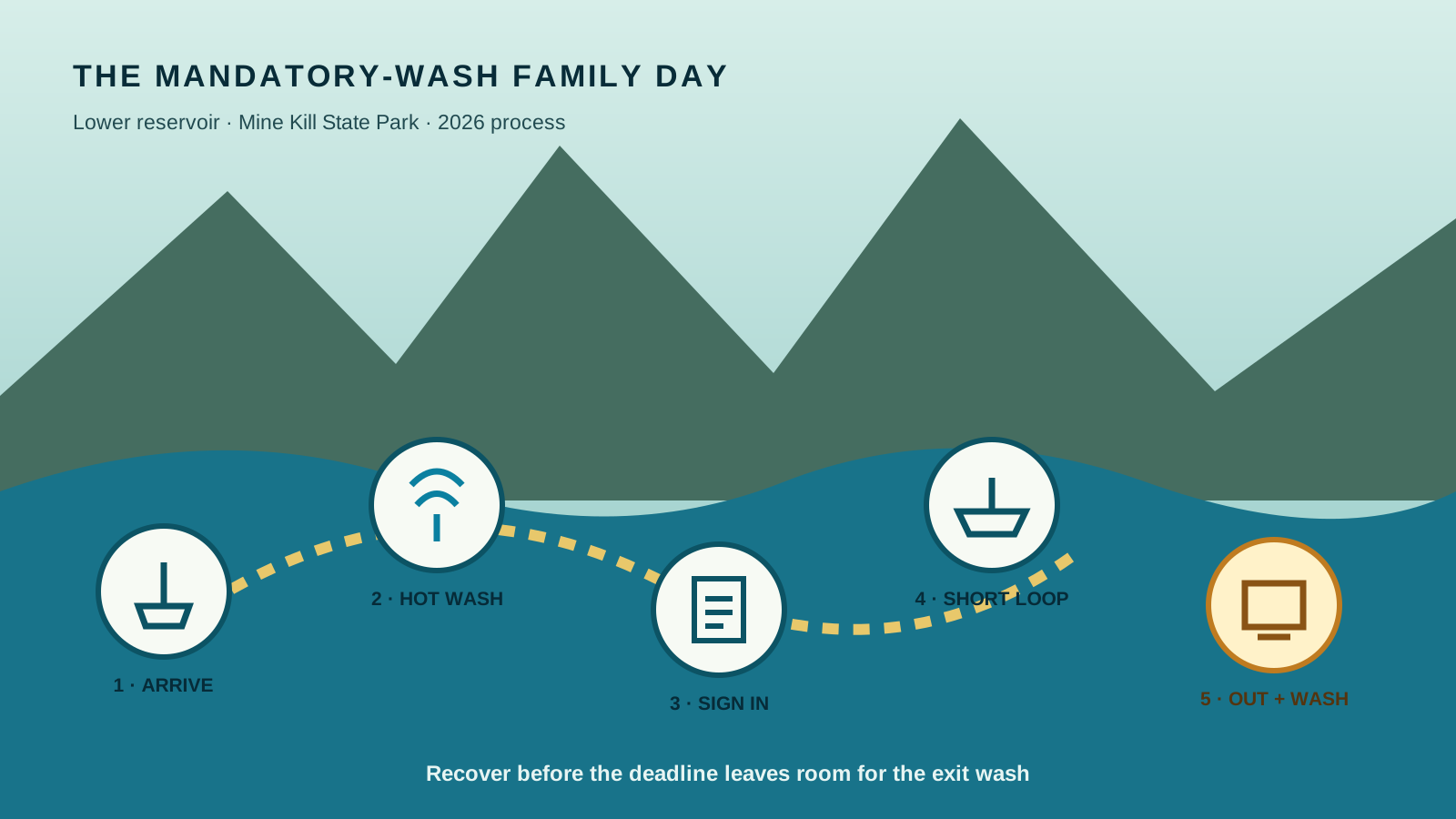
The planning visual below keeps the unusual access steps visible: wash before launch, sign in, run a short loop, recover early and wash again. It is not a navigation chart or a substitute for the current NYPA notice, park hours, weather and posted directions.
Confirm the lower reservoir—not the upper reservoir
There are two different boating areas at the Blenheim-Gilboa Pumped Storage Project. New York Power Authority's May 22, 2026 announcement says gasoline-powered boats, electric boats and human-powered craft may use the lower reservoir through the Mine Kill State Park launch. The upper reservoir is limited to rowboats, canoes, kayaks and similar craft, with or without electric trolling motors; gasoline engines and sailboats are prohibited there.
This guide covers only the lower reservoir and the Mine Kill process. Put 161 Minekill Road, North Blenheim in the trip notes, then confirm directions on the official park page. Do not follow a generic map pin to the upper reservoir and expect the same rules, hours or access.
NYPA states that either reservoir may close to boating at its discretion. Check the park alert and NYPA notice on the morning of departure. A previous season's opening is not evidence of today's access.
The wash station is part of launch time
Every boater must use Mine Kill's hot-water boat wash station before entering and again after exiting the lower reservoir. Boaters must also sign in at the toll booth or park office on the day of use. Treat both washes as required operating steps, not a courtesy rinse that can be skipped when a line forms.
Arrive with compartments accessible and loose family gear organized so staff directions can be followed without unpacking the whole tow vehicle. Remove drain plugs where appropriate for transport and disclose any livewell, baitwell, bilge, ballast, anchor, trailer bunk or other area that can retain water or material. Follow the station operator's instructions; do not invent a home workaround.
The published launch checklist still applies after decontamination. Reinstall the drain plug when and where safe, fit life jackets away from moving vehicles, rig out of the lane and assign one adult to children. The wash does not replace a mechanical prelaunch check.
Use the one-hour rule as a two-hour family deadline
NYPA says boating begins at 7:30 a.m. and every boat must be off the reservoir one hour before the park closes; the park remains open until dusk. State Parks also lists the normal boating season as April 1 through October 15, while the specific 2026 reopening occurred May 23 after launch rehabilitation. Posted conditions control.
A family should set its own recovery time at least two hours before the park's confirmed closing. That leaves room for a ramp queue, trailer trouble, the mandatory exit wash, wet clothing and an unhurried drive out. “Off the water” is not the same as “finished”: the boat still has to be secured and cleaned.
The route is a shakedown loop, not a dam tour
First 30 minutes: clear the ramp at posted speed, establish a lookout and stay within an easy return while checking steering, cooling, battery voltage, bilge condition and passenger comfort. Note the actual wind, traffic and any restricted areas or buoys.
Next 60 to 90 minutes: make one modest extension using current navigation information and all posted boundaries. The reservoir supports motor boating, kayaking and water skiing, so expect large differences in speed and wake. Give human-powered craft wide room and do not treat infrastructure as a sightseeing target.
Turn once: return when the first objective is complete. Do not add an unplanned second lap because the water looks calm. A pumped-storage project is working infrastructure; shoreline access, water levels and operating areas may change. Posted restrictions and staff directions outrank any route described here.
Weather and water temperature set the usable window
Use the National Weather Service point forecast for North Blenheim, then compare it with conditions at the ramp. Check sustained wind, gusts, thunderstorms, visibility, air temperature and overnight cooling. A valley forecast cannot describe every gust or exposed reach on the reservoir.
Cancel for thunderstorms in the operating window, visibility that prevents a proper lookout, wind the operator cannot handle at the ramp or cold-water conditions the crew is not equipped to survive. Hearing thunder ends the exposed-water plan. The family weather guide turns those observations into departure, turnaround and cancellation triggers.
Cold water deserves a separate decision even on a warm day. Wear life jackets, secure children before the dock and avoid swimming from the boat unless it is explicitly permitted at the exact location and all propulsion, lookout, reboarding and water-quality questions have been resolved. The park's pool is the clearer swim option when officially open.
Do not count on a water-access lunch stop
The official sources describe recreation at Mine Kill State Park, not a chain of transient docks around the reservoir. Bring water, lunch and two simple snacks aboard. Fuel before arrival and calculate the route with the fuel-range guide; do not plan around an unverified fuel dock.
Eat on the boat only when it can be legally and safely secured without distracting the operator. The dependable second half of the day begins after retrieval: picnic grounds, playground, disc golf, trails, Mine Kill Falls overlooks and the pool complex are land-based choices subject to current operations.
On August 24, 2026, State Parks posted that the pool complex would be open 10 a.m.–6 p.m. on weekends and holidays through September 7. Earlier calendar text on the same page lists a broader summer schedule. That disagreement is exactly why the live alert or a phone call matters more than a copied season table.
Restrooms, accessibility, pets and cost
State Parks lists no vehicle entrance fee, courtesy of NYPA. It also lists summer kayak rentals at $5 per hour for a solo kayak and $7 per hour for a tandem, with a call to the park office for reservations. Those are volatile 2026 details, not promised future pricing or availability.
The park directs visitors to call for accessibility information. The rehabilitated lower launch includes an accessible sidewalk according to NYPA, but that does not prove an accessible transfer into the family's boat. Call 518-827-6111 for park details or 518-827-8690 for the boat launch and describe the actual parking, wash-station, dock, restroom and boarding support needed.
Up to two pets are allowed in day-use areas unless prohibited by signs or directives. Pets must be supervised, crated or leashed no longer than six feet, and proof of rabies inoculation may be requested. They are excluded from playgrounds, buildings, pools and certain other facilities, with service-animal exceptions. A dog aboard also needs shade, water, safe footing and a controlled reboarding plan.
Pack for two inspections and a shore reset
Keep gear away from controls, life-jacket access and the path between seats and dock. The best packing system makes the required inspections easier rather than hiding retained water under loose bags.
Failure and meltdown plans are the same plan
If the boat develops a fuel smell, steering problem, unexplained bilge water, repeated electrical fault, cooling alarm or abnormal vibration, return while propulsion and daylight remain. Do not use a family outing to diagnose a safety-critical system on open water. Follow the exact manuals and use a qualified marine technician.
If a child is cold, nauseated, frightened or done, use the same return decision. Water, snack, layer and quiet time can stabilize a small problem, but they should not become arguments for another lap. Recover, complete the wash and switch to the park.
If the launch is closed at arrival, do not search for an unofficial shoreline entry. Use the dry-day plan: falls overlook, picnic, playground or another officially open park facility. Because NYPA can close the reservoir at its discretion, that fallback is part of responsible planning rather than evidence the trip failed.
Who should go—and who should choose a simpler water
This day fits a family with a known trailerable boat, an operator comfortable at a public ramp and enough patience to complete two wash-station visits. It is particularly good for a crew that values a short controlled boat session plus substantial shore options.
Skip it when the family needs guaranteed pool hours, guaranteed kayak rental, unrestricted shore access or a launch process with no extra steps. First-time trailer operators should practice elsewhere with an experienced helper before adding a mandatory wash and hard closing time. Crews who cannot access the boat safely at the rehabilitated launch should confirm accommodations before towing.
Afterward, log arrival, wash, launch, route, wind, recovery and exit-wash times in the boat log. The useful measure is not miles traveled. It is whether the crew completed every required step with enough margin that the next visit can be simpler.
Frequently asked questions
Is the Blenheim-Gilboa Lower Reservoir open to boats in 2026?
Yes. NYPA announced that the lower reservoir reopened for recreational boating on May 23, 2026 after rehabilitation of the Mine Kill launch. NYPA may close the reservoir at its discretion, so verify the live notice before traveling.
Can gasoline-powered boats use the lower reservoir?
NYPA's 2026 notice says boats with gasoline engines may use the lower reservoir. The upper reservoir has different restrictions and prohibits gasoline engines and sailboats.
Is washing the boat required at Mine Kill State Park?
Yes. Every boat must use the park's hot-water wash station before entering and again after exiting the lower reservoir, and boaters must sign in at the toll booth or park office.
What time must boats leave the lower reservoir?
NYPA says boating begins at 7:30 a.m. and all boats must be off the reservoir one hour before the park closes. Confirm that day's closing and set an earlier family recovery target.
Does Mine Kill State Park charge a launch fee?
The current 2026 park page lists no vehicle entrance fee, courtesy of NYPA. Fees and operations can change, so confirm before departure.