
Editorial disclosure: This guide uses the current U.S. Coast Guard Navigation Rules and federal product-safety guidance. It does not claim hands-on testing, approval authority or installation expertise. Retail links may be affiliate links that support Nautical Dream without changing the price you pay. The vessel, operating status, length, waters, exact certified light, installation instructions and current rules control; use a qualified marine electrician or technician when selection, wiring or placement is uncertain.
Affiliate disclosure: Nautical Dream may earn a commission from qualifying purchases made through marked retail links, at no additional cost to you. Recommendations remain editorially independent. As an Amazon Associate I earn from qualifying purchases.
Navigation lights are a language. Red, green and white tell another operator what kind of vessel is present, which way it is moving and, in some cases, whether it is underway or anchored. The common shopping mistake is to treat that language as a brightness contest. The useful buying process starts with the exact pattern required for the boat's length, propulsion and status. Only then do housing style, LED efficiency, pole length, wiring and price become meaningful.
Read the required pattern before the catalog
The framework below shows why color alone is not enough: determine the vessel's operating state, required sectors and placement before choosing portable or hardwired power. It is not a legal light diagram; verify the current rules and certified fixture for the exact vessel.
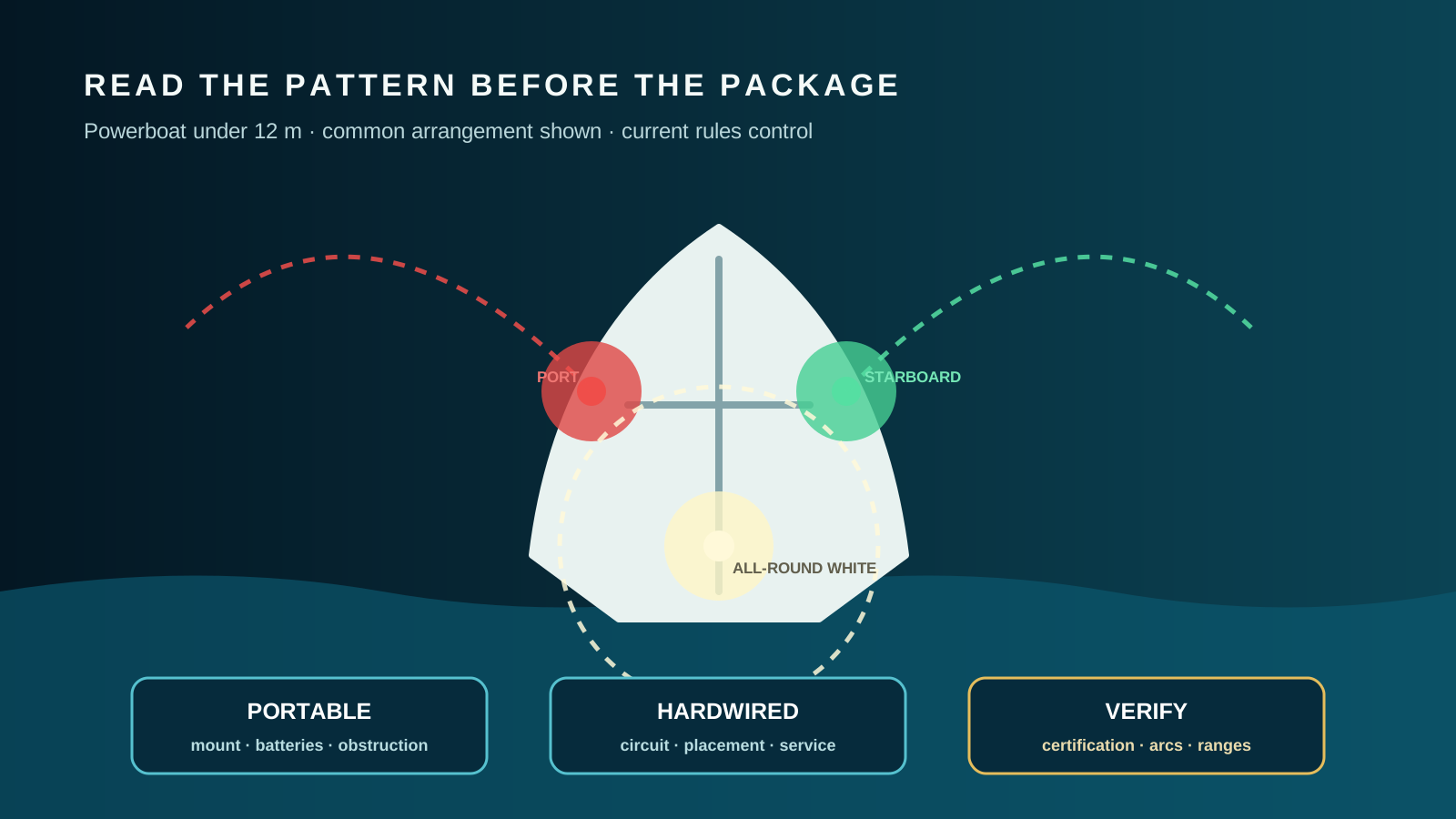
Start with the operating state, not the fixture
The Coast Guard says navigation lights are displayed from sunset to sunrise and in or near restricted visibility such as fog, snow or heavy rain. Rule 20 also prohibits other lights that can be mistaken for the prescribed lights, impair their visibility or interfere with a proper lookout. Decorative LEDs and cockpit glare are therefore part of the decision, not harmless background.
Next identify the boat as it will actually be operating: power-driven underway, sailing, rowing, anchored, towing or in another special status. This guide focuses on ordinary recreational powerboats under 12 meters because that is where portable-versus-hardwired shopping is most common. Rule 23 permits those powerboats to show sidelights and an all-round white light instead of the larger-vessel arrangement. That shortcut does not apply to every craft or status.
Read the current Amalgamated Navigation Rules for the actual vessel. The night-boating guide addresses lookout, speed and route planning; buying a legal light pattern does not make night operation easy.
The arc matters as much as the color
A sidelight is not merely a red or green bulb. Rule 21 defines sidelights as showing an unbroken light over an arc of 112.5 degrees, from dead ahead to 22.5 degrees abaft the beam on its respective side. A sternlight covers 135 degrees. An all-round light covers 360 degrees. Those sectors let another vessel infer heading.
A portable lantern strapped to a rail can be bright and still fail because the lens faces the wrong direction, a windshield blocks part of the sector or the pole tilts under way. Likewise, two independent red and green fixtures mounted at different heights can create a confusing presentation if placement is improvised. Annex I governs technical positioning and screens; the exact arrangement depends on vessel size and configuration.
Do not buy an unverified LED replacement
The Coast Guard has issued a Marine Safety Alert about unapproved navigation lights and warns that replacement lighting may be improper when it does not meet technical certification requirements. The agency specifically notes that LEDs, rope lights, underwater lights and decorative lighting can violate the Navigation Rules. “Marine-grade,” “super bright” and a claimed lumen count are not substitutes for a compliant navigation-light specification.
For a replacement, match the function, vessel-length range, voltage, color, visibility range and certification marking in the manufacturer's documentation. Do not put a random LED bulb into a housing certified around another light source; the resulting intensity, color and sector can change. Replace a complete certified assembly unless the fixture manufacturer explicitly approves the exact replacement lamp.
Portable lights: the honest use case
A portable battery-powered set can be sensible on a small open boat without a permanent electrical system, on a tender used infrequently after sunset or as an emergency replacement that has been verified for the boat. It avoids new hull penetrations and lets the owner remove the unit for battery service and theft prevention.
The tradeoffs are mechanical and human. Suction cups, clamps and magnets can shift; a pole can be too short to clear passengers or an outboard; batteries self-discharge; contacts corrode; and the light may be stored ashore when an afternoon turns into an evening. A portable unit only works if its certified pattern and range fit the vessel and its mounting method remains secure in the actual wind, spray and vibration.
Compare portable navigation-light kits
Do not treat a flashlight, headlamp or glow stick as a substitute for the prescribed powerboat lights. Narrow exceptions in the rules belong to specific craft and conditions; they are not a general small-boat escape clause.
Hardwired lights: better continuity, higher installation stakes
A correctly selected hardwired system is usually the better primary for a frequently used powerboat. The controls stay aboard, the mounting can be rigid, and the lights draw from the boat's maintained electrical system. Separate bow and stern fixtures also allow placement around consoles, towers and covers.
But permanent does not mean dependable. Voltage drop, undersized conductors, poor terminations, corroded sockets, a shared failed fuse or a switch label that nobody understands can disable the pattern. Wiring must follow the boat and fixture manuals, use proper overcurrent protection and preserve required placement. A light that works on a loose shop battery has not proven the installed circuit.
Compare all-round white navigation-light poles
Use a qualified marine electrician when circuit protection, conductor sizing, grounding, sealing or structural mounting is uncertain. The marine wiring guide explains the stop lines without pretending a generic diagram replaces the boat's documentation.
Height and obstruction decide the pole length
The right pole is not the shortest one that fits a base. An all-round white light must actually be visible all around, and prescribed vertical relationships matter. An engine cowling, bimini, person at the helm, rod rack or folded canvas can erase a sector. A taller pole may solve one obstruction while creating flex, storage and overhead-clearance problems.
Measure from the installed base with the boat in its operating configuration. Raise the bimini, load normal passengers, turn the outboard through its range and consider the dinghy or tow-sports gear. Match the base type, pin layout, locking method, voltage and manufacturer's series; visually similar plug-in poles are not automatically interchangeable.
Build an independent failure plan
A spare bulb does not help a sealed LED fixture, and a second hardwired light on the same failed circuit is not an independent backup. Define the credible failures: fixture, switch, connector, fuse, battery, pole damage and forgotten portable batteries. Then choose a backup that does not depend on the same weak point.
For a small powerboat, that may mean a certified portable emergency set sized and mounted for the vessel, stored dry with inspected batteries. It may also mean spare manufacturer-approved lamps, the exact fuse and the tool required to access a connection—provided the work can be done safely at the dock. Never troubleshoot live wiring while drifting in traffic.
Record the backup location in the boat log. If the required pattern cannot be restored, do not depart. If it fails under way, reduce the problem safely, communicate as needed and return or seek assistance rather than improvising a misleading display.
Use a five-minute predeparture test
Clean lenses with the method in the fixture manual. Clouding, salt and insects reduce useful output; aggressive solvent can damage optical plastic. Log recurring moisture or heat rather than repeatedly drying a symptom.
What not to buy
- An uncertified marketplace light chosen by lumens. Brightness alone says nothing about color, sector, range or placement.
- A replacement bulb the housing manufacturer does not approve. The optical assembly is a system.
- A portable pole that cannot clear the boat's real obstructions. Catalog height is not installed visibility.
- Decorative red, green or white lighting that masks the required pattern. More light can make the vessel harder to interpret.
- A single failure-prone solution with no verified backup. A night return should not depend on one corroded plug.
The no-buy option is inspection. If the existing certified system is correctly placed, clean, dry, reliably powered and supported by available replacement parts, service it according to the manufacturer instead of replacing it for cosmetic reasons.
The final selection worksheet
If any box depends on “probably,” keep the boat in daylight and resolve it with the manufacturer, current rules or a qualified technician. Navigation lights are not mood lighting. Their value is that another operator can read the vessel correctly before either crew needs luck.
Frequently asked questions
When must a recreational boat display navigation lights?
The Coast Guard says navigation lights are displayed from sunset to sunrise and when operating in or near restricted visibility, including fog, snow and heavy rain. Current rules and the vessel's status determine the exact pattern.
Can a small powerboat use an all-round white light and red-green sidelights?
Rule 23 permits a power-driven vessel under 12 meters to use an all-round white light and sidelights instead of the larger-vessel arrangement. Placement, visibility and technical requirements still apply.
Are portable battery navigation lights legal?
They can be appropriate when the exact certified light, pattern, range and mounting meet the rules for the vessel. Portable does not remove the requirements for correct sectors, placement, visibility and reliable operation.
Can I replace an incandescent navigation-light bulb with an LED?
Only when the fixture manufacturer approves the exact replacement. A different source can alter color, intensity and sector; replacing the complete certified assembly is safer when compatibility is undocumented.
Do decorative boat LEDs affect compliance?
They can. Rule 20 prohibits lights that can be mistaken for prescribed lights, impair their visibility or interfere with a proper lookout. The Coast Guard has specifically warned about decorative and underwater lighting.