
Editorial disclosure: Carbon monoxide is an immediate life-safety hazard. This guide summarizes current Coast Guard, CDC, ABYC and manufacturer guidance; it is not a substitute for the boat builder's instructions, a qualified marine technician or emergency medical care. Retail links may be affiliate links that support Nautical Dream without changing the price you pay.
Affiliate disclosure: Nautical Dream may earn a commission from qualifying purchases made through marked retail links, at no additional cost to you. Recommendations remain editorially independent. As an Amazon Associate I earn from qualifying purchases.
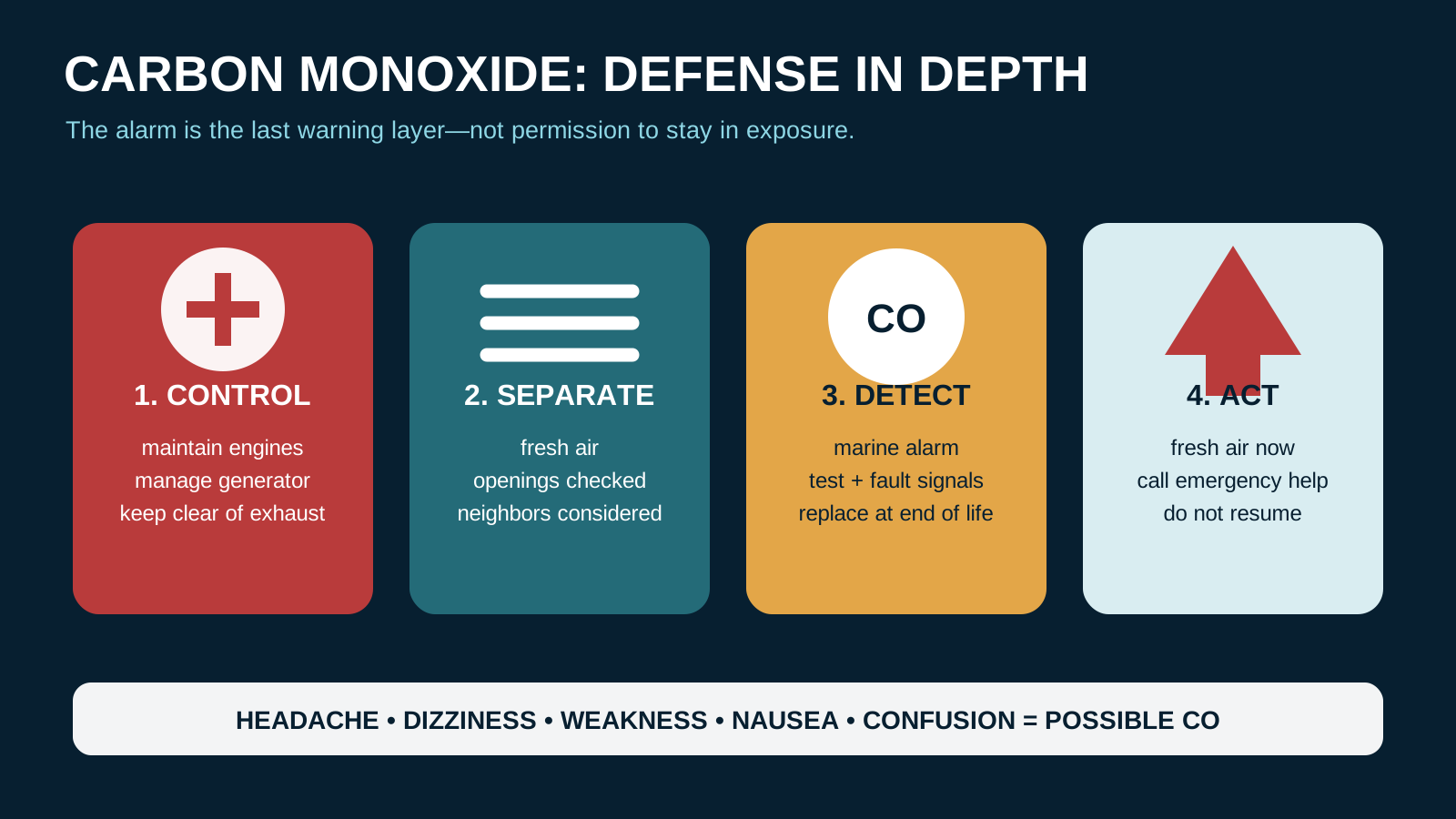
Carbon monoxide can collect inside cabins and in exterior pockets around exhaust outlets, swim platforms and neighboring boats. It can make a person confused or unconscious before anyone understands the problem. A marine alarm matters, but the buying decision is inseparable from exhaust maintenance, generator operation, ventilation, passenger rules and an emergency response the crew can execute immediately.
Start with the sources, not the detector aisle
Gasoline and diesel engines, generators, fuel-burning heaters and cooking appliances can produce carbon monoxide. Exhaust can re-enter through openings or collect beneath canvas and around stern structures. Another boat's generator can become your exposure during a raft-up or at a dock.
The Coast Guard says to know every exhaust outlet, maintain fresh-air circulation, run exhaust blowers whenever the generator operates and keep people away from exhaust areas. Never sit, teak surf or hang from the back deck or swim platform while engines are running. No alarm makes those activities safe.
Map the propulsion, generator and appliance exhausts on the boat. Add them to the predeparture checklist and teach every operator the shutdown procedure.
Buy a marine alarm for a marine installation
A household plug-in alarm is not automatically suitable for vibration, humidity, temperature, chemicals, available power or installation aboard a boat. Select an alarm whose manufacturer explicitly identifies the exact model for marine use and follow its installation instructions. ABYC lists A-24 for installation of carbon monoxide detectors and alarms and makes its carbon-monoxide safety resource available to boaters.
Compare power source, backup power, alarm and fault patterns, end-of-life behavior, interconnection, relay functions and environmental limitations. A display can aid troubleshooting, but a number does not replace the alarm response or source control.
Battery versus vessel-powered models
A sealed-battery marine alarm can avoid dependence on the boat's DC circuit and simplify a manufacturer-approved installation. A 12/24-volt model can integrate with vessel power and may offer battery backup, interconnection or generator-shutdown relay options. Those features require exact compatibility and professional installation.
Do not assume a vessel-powered alarm is working because the cabin lights work. Verify the correct circuit, fuse, polarity, standby draw and backup behavior from the manual. Never connect a relay to shut down propulsion or a generator without the alarm, engine, generator and boat manufacturers' approved design; a false or miswired shutdown can create another hazard.
Fireboy-Xintex publishes battery and 12/24-volt versions of its marine CMD6 family with an approximate seven-year end-of-life. That is one manufacturer's specification, not a universal lifespan.
Placement is a design decision
An alarm detects the air at its sensor. Bulkheads, doors, fans, berths, return-air paths and openings alter what reaches it. Follow the boat builder, alarm manufacturer and current ABYC A-24 guidance for the number and locations. Do not place a unit merely where drilling is easy or an old screw pattern exists.
Protect the alarm from water, cleaners, paint, solvents and physical damage within the manufacturer's limits. Do not cover it, store gear against it or move it around as a spot tester. If the cabin layout, generator, exhaust or canvas changes, have the detection plan reviewed again.
A qualified marine technician should handle hardwired, interconnected or relay-equipped installations and any case where the builder's layout cannot be reconciled with the alarm manual.
Test, decode and replace on the manufacturer's schedule
Use the alarm's test procedure at the interval stated in its manual and before occupied overnight use. Learn the difference between alarm, fault, low-power and end-of-life patterns. Put the instructions and replacement date in the boat record; do not rely on memory or a faded sticker.
The test button verifies the electronics and horn as described by the manufacturer. It does not prove the entire cabin is free of CO or that exhaust cannot enter under different conditions. Never test with vehicle exhaust, flame, smoke or improvised gas.
The alarm response has no wait-and-see step
Tell responders that boat-related CO exposure is suspected and describe engines, generator, appliances, neighboring exhaust and symptoms.
Symptoms can look like a bad boat day
CDC lists headache, dizziness, weakness, nausea, vomiting, chest pain and confusion among common symptoms. Severe exposure can cause loss of consciousness and death. The Coast Guard warns boaters to treat apparent seasickness as possible CO poisoning unless they are sure it is not.
If more than one person develops similar symptoms, if symptoms improve in fresh air, or if someone becomes unusually sleepy or confused near operating equipment, act immediately. Children, sleeping passengers and people with health vulnerabilities may not report symptoms clearly.
Fresh air is the first move, not the final medical decision. Contact emergency services even if someone appears to recover.
Swim platforms, generators and raft-ups are special traps
Keep engines and generators off when people are swimming near exhaust outlets or occupying vulnerable stern areas. Never allow teak surfing or holding the platform while propulsion runs. Check that every swimmer is aboard and accounted for before restarting.
At anchor or dock, evaluate where your exhaust and neighboring exhaust travel. Canvas can reduce air exchange and change pressure. Wind shifts can turn a previously clear area into a collection zone. A portable fan does not certify the space safe.
During a raft-up, agree on generator and engine rules before people enter the water or go to sleep. If another operator will not control exhaust, separate the boats. Use the raft-up safety plan.
What not to buy—and the no-buy option
- A household alarm whose manufacturer does not approve the exact model for marine use.
- An old-stock alarm with an unclear manufacture, activation or end-of-life date.
- A unit selected only because it fills the previous alarm's screw holes.
- A hardwired or relay product without a compatible, documented installation plan.
- A “low-level monitor” treated as permission to remain in exhaust exposure.
The no-buy option exists only after verification. If the installed marine alarms match the boat's requirements, are within life, correctly located, powered, unobstructed and passing the manufacturer's test—and the exhaust and operating practices are sound—document the inspection rather than replacing working equipment blindly.
The carbon-monoxide defense check
Pair this system with the boat ventilation guide, fire-response plan and a free Coast Guard Auxiliary or Power Squadrons Vessel Safety Check.
Frequently asked questions
Can I use a household carbon monoxide alarm on a boat?
Only if the exact model's manufacturer explicitly approves the installation. Marine environments and standards differ; choose a marine-rated alarm and follow the boat builder, alarm maker and ABYC guidance.
Where should a marine CO alarm be installed?
Follow the exact alarm manual, boat builder and current ABYC A-24 guidance. Cabin layout, berths, openings, airflow and exhaust sources affect the required number and placement.
How long does a marine carbon monoxide alarm last?
It varies by model. One current Fireboy-Xintex family specifies approximately seven years, but owners must use the date and end-of-life instructions for their exact alarm.
What should I do when a boat CO alarm sounds?
Move everyone to fresh air, contact emergency services, shut sources down only if safe, account for every person and do not resume occupancy until the cause and system are professionally evaluated.
Can carbon monoxide collect outside a boat cabin?
Yes. Coast Guard and CDC guidance describes exposure around swim platforms, stern areas and neighboring exhaust. Outdoor air does not guarantee safety.