Editorial disclosure: Recommendations are chosen for fit, safety and long-term usefulness. Retail links may be affiliate links, which can support Nautical Dream without changing the price you pay or our editorial judgment. Specifications and prices change; verify the exact model and package before ordering.
Affiliate disclosure: Nautical Dream may earn a commission from qualifying purchases made through marked retail links, at no additional cost to you. Recommendations remain editorially independent. As an Amazon Associate I earn from qualifying purchases.
A cooler is one of the heaviest loose objects most families carry aboard. The published quart number hides the decision that matters: how much interior remains after ice, whether the lid can open under the seat, and who will lift sixty pounds of food, cans and meltwater back onto the dock. The best cooler is a piece of boat equipment, not a camping purchase that happens to come aboard.
Our three practical picks
YETI Tundra 45
Exceptional durability, replaceable wear parts and a strong five-year warranty make it a long-term choice where the compact footprint fits.
- Very rugged construction
- Useful accessory ecosystem
- Heavy for its usable interior
RTIC 52 QT Ultra-Light
More volume at a lower empty weight than traditional rotomolded designs, useful for families carrying the cooler between house, dock and boat.
- Large practical capacity
- Lower empty weight
- Bulkier footprint
Igloo BMX 52
A rugged conventional build with useful capacity and widely available replacement components at a more approachable price.
- Strong value
- Manageable construction
- Less refined hardware
None is automatically “best.” The YETI suits the owner who keeps equipment for a decade. The RTIC fits a family that moves a large load often. The Igloo leaves budget for tie-down hardware, food and fuel—which may be the wiser system purchase.
Comparison that includes the inconvenient facts
| Cooler | Best for | Main strength | Main tradeoff | Typical price tier |
|---|---|---|---|---|
| YETI Tundra 45 | Premium durability in a compact footprint | Construction, parts and warranty | About 37 lb empty and modest interior for outside size | Premium |
| RTIC 52 Ultra-Light | Family weekend capacity | Lower weight than rotomolded peers | Large footprint still consumes deck space | Midrange |
| Igloo BMX 52 | Day boating and budget buyers | Useful capacity for the price | Hardware and sealing are less premium | Budget |
Published can counts are not directly comparable because ice ratios differ. YETI’s own capacity guidance, for example, distinguishes cans-only from cans-with-ice. Measure the actual food and drink load rather than buying the highest marketing number.
Who should buy a hard cooler—and who should not
Buy a hard cooler when it can remain aboard or be moved by two people, needs to serve as a seat or work surface only if rated for it, and will support full-day or multi-day trips. It is also the right choice when gear takes abuse, wildlife resistance matters ashore or the owner values replaceable latches and gaskets.
Avoid a large hard cooler if the boat has minimal deck space, a high gunwale, no secure tie-down or a single person must carry it full. A quality soft cooler is often better for sandwiches and drinks on a six-hour run. Built-in insulated storage may be the best answer when it drains and seals properly. More ice retention is not useful when the cooler stays home because nobody wants to lift it.
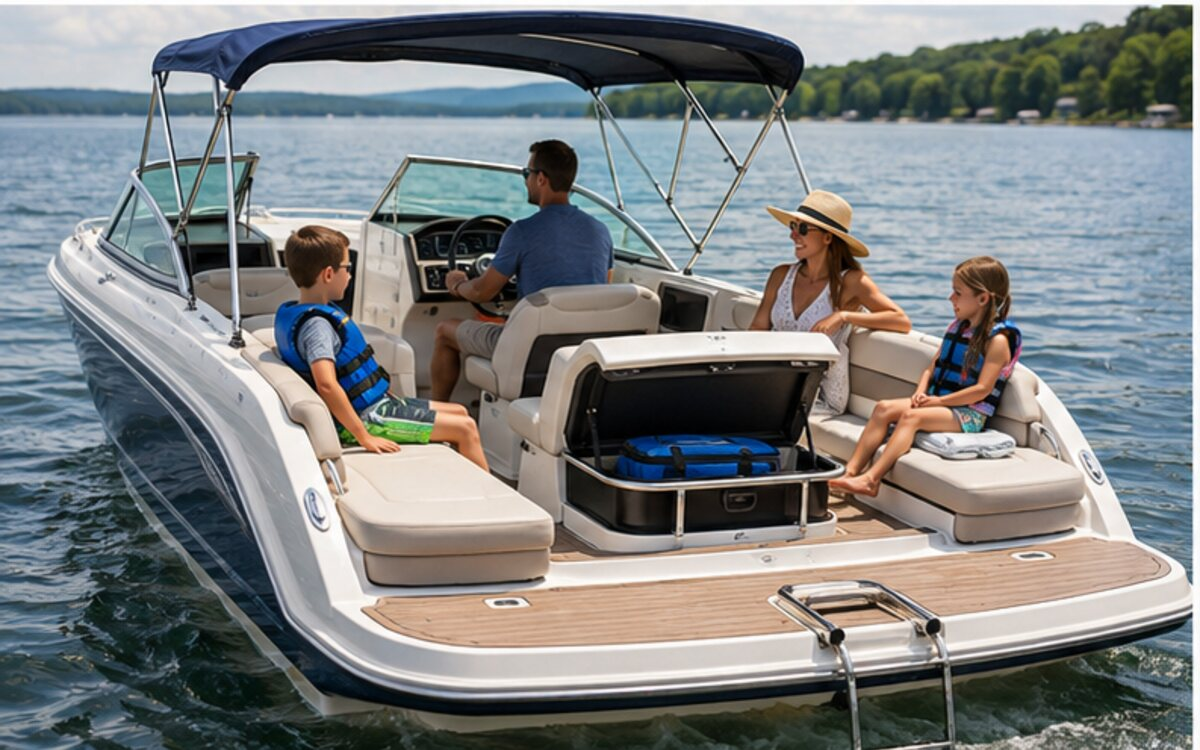
Capacity: separate drinks from food
Opening frequency, not merely insulation, drives ice loss. A drink cooler may be opened twenty times an afternoon. A food cooler should stay closed until mealtime. On longer trips, two smaller coolers can outperform one enormous chest because the food side remains undisturbed and each load can still be carried.
For two adults and children on a day boat, roughly 25 to 40 quarts may be enough if water is carried separately. A weekend often pushes toward 45 to 65 quarts. Do a packing test with real containers and the manufacturer’s recommended ice ratio. Tall bottles, meal-prep boxes and a dry basket consume shape differently than cans.
Measure the boat, not the brochure
Measure length, width and height at the intended location, including lid swing, handles and tie-down brackets. Confirm that the cooler does not obstruct the transom door, swim ladder, fire extinguisher, battery switch or emergency exit. Sit in adjacent seats and move through the cockpit with hands full.
A cooler that fits beneath a leaning post may not open there. One used as a step can slide unless secured. A bright white lid can reflect into the windshield. The cardboard-box test works here too: build the published outside dimensions and live with them aboard before ordering.
Loaded weight changes everything
A 37-pound Tundra 45 can exceed sixty or seventy pounds with ice and provisions. A larger chest can cross one hundred pounds quickly. That weight becomes a projectile in a hard turn and a back injury at the dock. Use two-person lifting technique and avoid carrying by flexible handles that place the load far from the body.
Consider filling the cooler after it is aboard. Transfer food in baskets and buy ice near the marina. At retrieval, drain controlled meltwater only where appropriate and unload in smaller batches. Never dump food-contaminated water into a sensitive harbor.
Tie-down and installation
Use manufacturer-compatible or marine-grade tie-downs attached to structure capable of carrying the load. Do not trap the lid or drain plug. Straps should remain inspectable and should not create a trip hazard. If the cooler doubles as seating, verify the lid and mounting system are intended for that use and provide a backrest or handhold where required.
Permanent chocks create a clean installation but reduce flexibility. Quick-release brackets simplify removal but need corrosion-resistant fasteners and sealed penetrations. Through-bolting may be necessary; random screws into a thin liner are not structural. A well-installed budget cooler is safer than a premium chest wandering the cockpit.
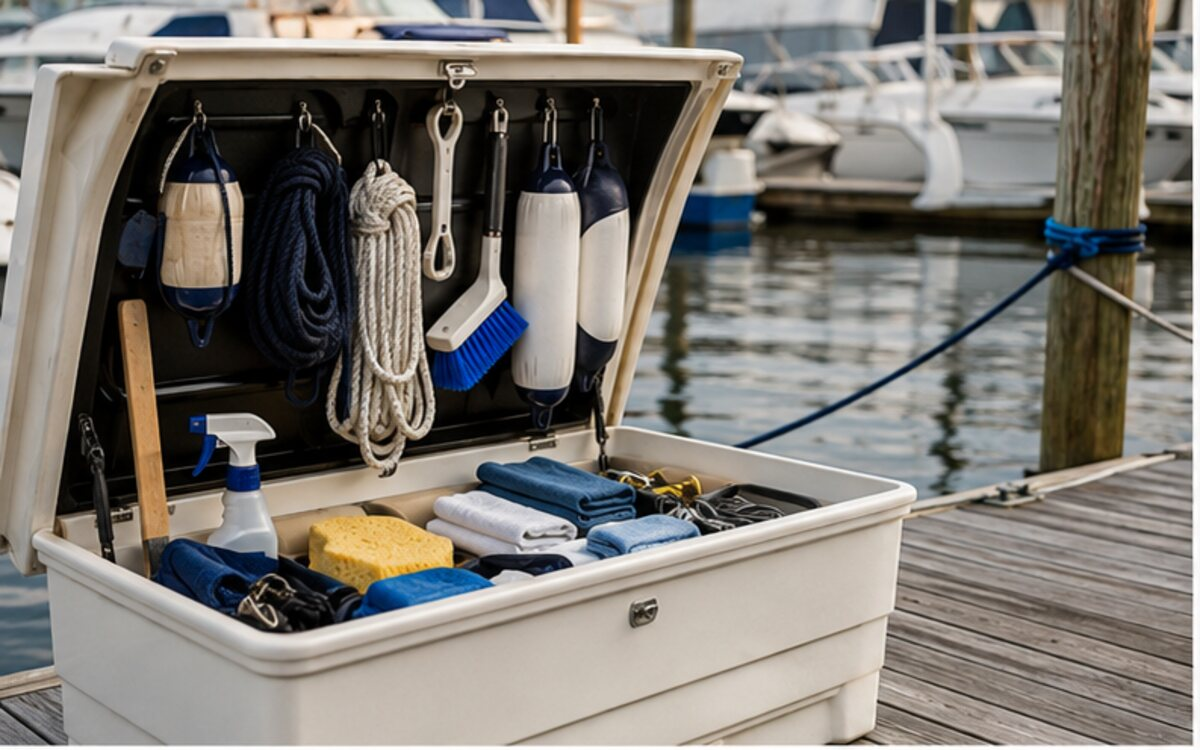
Ice retention: realistic expectations
Manufacturer “up to” claims assume favorable conditions that a boat rarely provides. Direct sun, a hot deck, warm cans and constant opening shorten performance. Pre-chill the cooler and contents, freeze some water bottles, use block ice for duration and cube ice for contact, and keep the chest shaded with ventilation around it.
A two-to-one ice-to-contents ratio by volume is a common performance benchmark but leaves much less food capacity than the quart label suggests. For an ordinary day, carrying that much ice may be wasteful. Match the load to the trip instead of staging a laboratory test on the boat.
Budget recommendation: spend on the system
The Igloo BMX 52 is a reasonable budget choice when the boat has room and the family needs one large chest. Use the savings for a dry basket, quality strap system and a smaller soft cooler for frequent-access drinks. Replacement drain and hinge parts are available for some BMX sizes, improving the ownership case.
An even cheaper conventional cooler can work for same-day boating if it closes securely and can be restrained. Do not pay a premium for multi-day insulation when the boat returns home by sunset. Money spent on shade and pre-chilling may outperform money spent on thicker walls.
Premium recommendation: durability over status
The Tundra 45 earns the premium recommendation because its construction, replaceable wear parts and five-year warranty support long ownership. It does not win on interior volume per exterior inch, and it is heavy. Buy it when the footprint fits and equipment is expected to survive repeated seasons.
For crews moving the chest frequently, a wheeled premium model may be tempting. Wheels help on pavement and can snag on thresholds, sand or dock gaps. They also add dimensions and weight. Evaluate the route from vehicle to boat, not just the deck.
Cleaning and care
Empty the cooler immediately after the trip. Wash with warm water and mild detergent, paying attention to gasket channels, basket rails and the drain. YETI publishes a stronger diluted-bleach method for heavy cleaning of its hard coolers; follow the specific manufacturer’s instructions rather than inventing a chemical mix.
Rinse thoroughly, dry with the lid open and store in a ventilated place. Lubricate or replace gasket and drain components only as directed. Avoid leaving wet towels inside. Fish odors and mildew become much harder to remove after a hot week in a closed garage.
Common failures
Latches stretch or break, hinges loosen, drain plugs disappear and gaskets collect debris or lose compression. Handles fail when owners drag a fully loaded chest or use them beyond design. Warped lids and cracked corners often follow heat, impact or using the cooler as unsupported furniture.
Before buying, check whether the manufacturer sells latches, hinges, handles, feet and drain parts. A cooler designed to be repaired has a lower long-term cost than a sealed bargain chest. Keep the receipt and record the model; color alone is a terrible way to order a drain plug five years later.
Long-term ownership costs
Ice is the recurring expense. A family buying twenty dollars of ice every weekend may spend more in a season than the price difference between coolers, yet insulation alone will not eliminate that bill. Reusable blocks, frozen bottles and disciplined packing reduce consumption. So does keeping the drink cooler separate.
Other costs include replacement parts, straps, baskets and the space the cooler consumes in storage. A premium chest can last many years, making cost per season reasonable. It can also become an expensive garage bench if the boat layout changes. Buy for the current boat and actual trip pattern.
Buying mistakes
- Comparing quart or can claims without a consistent ice ratio.
- Measuring floor space but not lid swing or handle travel.
- Ignoring loaded weight and the route from vehicle to boat.
- Using a cooler as a seat or step without approved mounting.
- Assuming “days of ice” applies in direct sun with warm contents.
- Buying one huge cooler when separate food and drink loads would work better.
The solution is a dry run: tape the footprint, load an existing container with an equivalent weight and have the actual crew move around it.
Alternatives and final verdict
Soft coolers are excellent for short trips, kayaks and crews carrying gear a long distance. Electric compressor coolers can reduce ice dependence on cruising boats with sufficient battery and charging capacity, but they introduce power draw, ventilation and installation requirements. Built-in boxes are convenient when well insulated and properly drained.
Final verdict: choose the Igloo BMX 52 for budget-conscious family use, the RTIC 52 Ultra-Light when capacity and carry weight matter together, and the YETI Tundra 45 when compact durability and repairable ownership justify the premium. Whichever brand wins, secure it. A sliding cooler is more dangerous than warm soda.
Frequently asked questions
What size cooler is best for a day on the boat?
About 25 to 40 quarts often works for a small family day trip when water is carried separately. Larger groups or weekends may need 45 to 65 quarts or separate food and drink coolers.
Is a rotomolded cooler worth it?
It is worth considering for repeated hard use and multi-day trips. For same-day boating, a lighter conventional cooler may be easier to carry and better value.
How should a cooler be secured on a boat?
Use a manufacturer-compatible or marine-grade tie-down attached to sound structure, with the lid, drain and emergency access still usable.
How do I make ice last longer?
Pre-chill the cooler and contents, use block and cube ice appropriately, keep the chest shaded, minimize opening and separate frequently accessed drinks from food.
Can a cooler be used as a seat?
Only if the cooler and mounting system are designed for seating and it can be secured appropriately. Do not assume every lid is structural.