
Long Point State Park gives a family useful infrastructure on Chautauqua Lake: a seasonal launch, marina, transient slips, fuel and food during posted concession hours, a playground and a guarded beach on limited days. That does not make the whole lake a one-day objective. The practical first trip uses the north basin to learn wind, traffic and boat behavior, then returns before the lake's narrow middle becomes a commitment rather than an option.
The north-basin operating plan
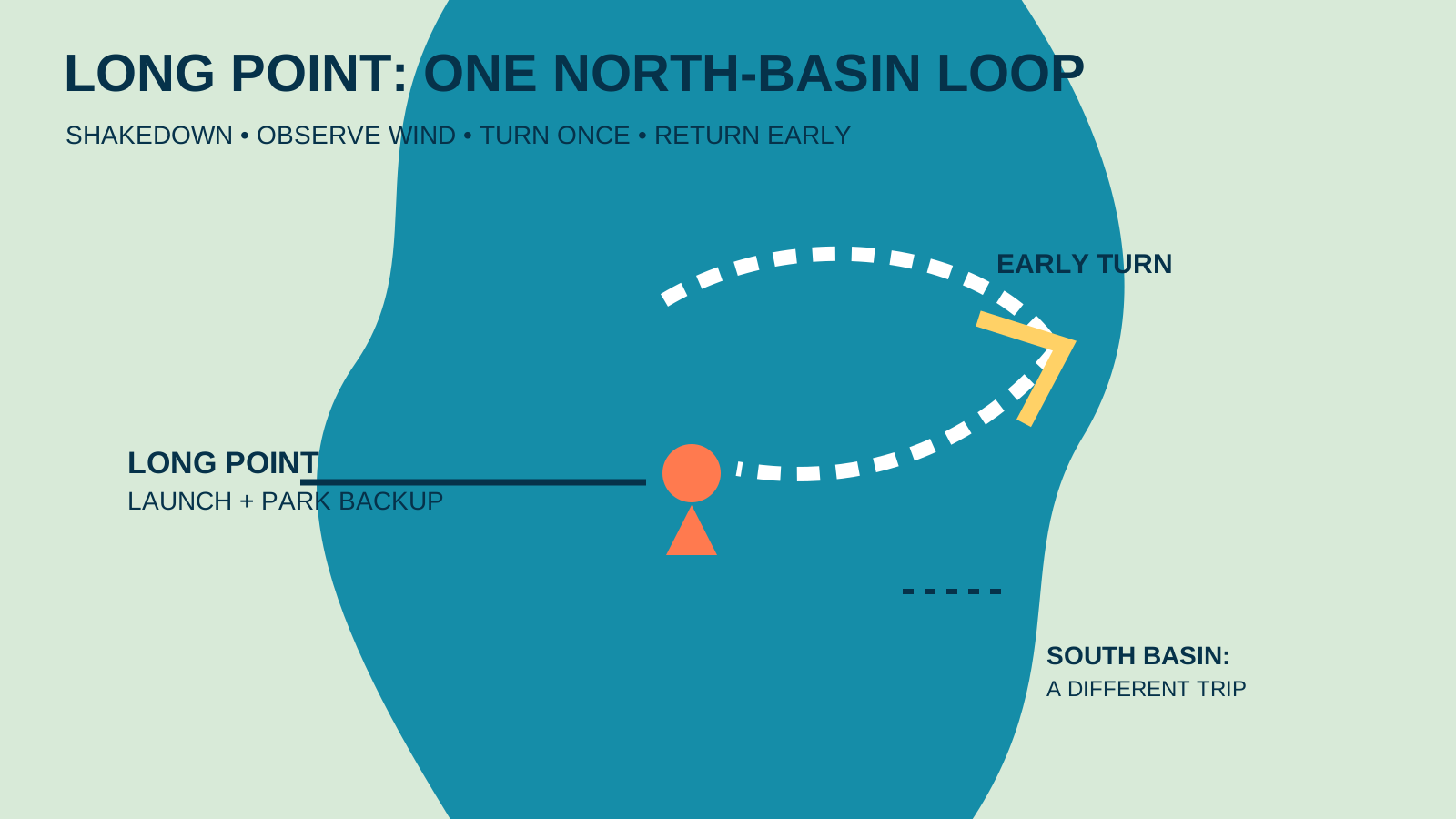
The visual below keeps the Long Point sequence compact: launch, run a nearby shakedown, make one north-basin loop, turn early and use the park as the backup. It is not a navigation chart; use current charts, markers, weather and posted directions for the actual route.
Confirm the correct Long Point before towing
New York operates multiple parks named Long Point. This guide covers Long Point State Park on Lake Chautauqua, the peninsula park in the Allegany Region—not the Long Point parks on Cayuga Lake or in the Thousand Islands. Save the official park page and phone number with the route.
The 2026 park page lists the launch ramp as seasonal and open 24 hours. Marina slips are listed from May 16 through October 11, with seasonal and transient reservations through ReserveAmerica. The marina concession has narrower staffed hours and handles fuel, food and kayak rentals at 716-294-1374. A launch being accessible does not guarantee fuel, food, staff or a transient slip.
Check the live Long Point page the morning of departure. Record the ramp status, concession hours, beach status and any alert separately.
Build the day around one north-basin loop
First 30 minutes: stay close enough for an uncomplicated return while checking steering, cooling, battery voltage, bilge condition, passenger comfort and the wind at water level. Identify the ramp from offshore and note traffic patterns before leaving the peninsula.
Next 60 to 90 minutes: make one modest north-basin loop using current navigation information and all posted markers. Keep enough room from shore, swimmers, paddlers, anglers and fixed hazards. Chautauqua's popularity creates mixed speeds and attention levels; a family route should avoid treating busy water as open space.
Turn once: return when the first planned objective is complete. Do not let a calm launch become an unplanned run through the narrows into the south basin. The destination framework explains why a reversible route beats a mileage goal.
Wind decides whether the basin feels small or exposed
Use the National Weather Service point forecast near Bemus Point, then compare it with actual conditions at Long Point. Check sustained wind, gusts, thunderstorm timing, visibility and overnight temperature. A shoreline forecast cannot describe every fetch-driven wave or wake pattern.
Set numeric cancellation and turnaround triggers before launch based on the operator, boat and crew. Cancel for thunderstorms in the operating window, visibility that prevents a proper lookout, or wind beyond the operator's ramp and close-quarters ability. If the observed lake is rougher than forecast, believe the water.
The north basin provides room for wind to build. A following sea outbound can become a harder head-sea return. Use the forecast guide and fetch guide, but keep the final call conservative.
The ramp is 24-hour; the useful services are not
The official 2026 schedule lists marina concessions from May 23 through September 7, Monday–Thursday 8 a.m.–7 p.m. and Friday–Sunday 8 a.m.–9 p.m.; from September 12 through October 13, weekends only from 8 a.m.–6 p.m. Those hours are volatile and do not promise that every service is available at every minute.
Fuel the tow vehicle and boat before relying on the park. Carry lunch, water and two snacks even if food is planned. Make transient-slip reservations when a dock stay matters, and confirm the exact arrival process. Never occupy an unassigned slip because the office looks closed.
Rig out of the launch lane, fit life jackets before children approach the dock and use the launch checklist. A 24-hour ramp can be quiet, dark and unstaffed; daylight is the better family margin.
Swimming is a separate park activity
The park lists a guarded beach on limited 2026 dates and explicitly recommends water shoes because of sharp zebra mussels. For August 29, the published schedule shows weekend beach hours of noon–6 p.m., staff and weather permitting. Verify the live alert because staffing, water quality and weather can change the plan.
Do not assume swimming from the boat is equivalent to using the beach. Boat swimming needs engines secured, keys controlled, every swimmer counted, a lookout, a reboarding system and water conditions that permit it. Never swim near a running engine or exhaust outlet.
The clean family sequence is boating first, retrieval second, then a separately supervised beach decision. That prevents wet swimmers, loose gear and propulsion from competing for attention. Use water shoes only where appropriate; they do not protect against every underwater hazard.
Invasive species are a departure and return responsibility
New York requires reasonable precautions against transporting aquatic invasive species. Before arriving, clean visible plants, animals and mud from the boat, trailer, anchor and gear; drain water where legal; and dry equipment as practical. Repeat after retrieval so Chautauqua material does not travel to the next waterbody.
Inspect bunks, rollers, axle areas, transducer brackets, livewells, bilges and anchor lines rather than checking only the propeller. Follow posted decontamination directions and never drain where prohibited. The park's zebra-mussel warning is also a reminder that invasive species are an operating reality, not an abstract conservation slogan.
Use the current NYSDEC clean-drain-dry guidance before moving the boat.
Pets, accessibility and shore logistics need confirmation
State Parks generally permits up to two pets in day-use areas unless signs or directives say otherwise. Pets must be supervised and crated or leashed no longer than six feet; proof of rabies inoculation may be requested. They are excluded from guarded beaches, playgrounds, buildings and certain other facilities, with service-animal exceptions.
A pet aboard needs shade, water, non-slip footing, a fitted flotation plan and a recovery method. The boating-with-dogs guide is the starting point, not a guarantee that this day fits every animal.
The park directs visitors to call for accessibility details. A launch and marina do not prove an accessible transfer into a particular boat. Ask specifically about parking, grades, docks, restrooms, beach access and the family's boarding setup. Choose a shore-only day if a safe transfer cannot be confirmed.
Use the park as the meltdown and weather backup
Long Point lists a playground, picnic areas, hiking, food, dockage and beach access. That makes an early boat return useful rather than disappointing. Pick one dry-land option before leaving home, and do not promise children that every amenity will be open.
If thunder develops, leave exposed docks and water and follow park staff direction. If wind rises, a child becomes cold or nauseated, or the boat shows a fuel smell, alarm, steering issue, unexplained bilge water or abnormal vibration, recover while propulsion and daylight remain. Do not diagnose a safety-critical problem on open water.
Food, shade, dry clothing and a quiet reset solve many small family problems after the boat is secure. They should never become reasons for another lap.
The dashboard plan
This plan fits a crew with a known trailerable boat and an operator comfortable with mixed traffic. Skip it when the family requires guaranteed beach staffing, marina food, rental availability or a long lake tour. Success is a clean launch, one calm loop and enough margin to enjoy the park afterward.
Frequently asked questions
Is the Long Point boat launch on Chautauqua Lake open 24 hours?
The official 2026 park page lists the seasonal launch ramp as open 24 hours. Verify the current alert and remember that marina services and concessions have narrower hours.
Can families get fuel and food at Long Point State Park?
The 2026 page lists fuel and food through the marina concession during posted staffed hours. Call 716-294-1374 and carry an independent fuel and food plan.
Does Long Point State Park have a swimming beach?
Yes, but guarded beach hours are limited, staff- and weather-dependent. The park recommends water shoes because of sharp zebra mussels.
Are pets allowed at Long Point State Park?
Up to two pets are generally allowed in day-use areas unless prohibited, supervised and on a leash no longer than six feet or crated. Pets are excluded from guarded beaches, playgrounds and buildings.
Should a first family trip cover both Chautauqua Lake basins?
Not by default. A conservative first day stays in the north basin, learns the conditions and returns early. Treat a south-basin run as a separately planned trip.