
Editorial disclosure: This guide uses U.S. Coast Guard safety guidance and the published scope of ABYC H-41. It does not claim hands-on product testing, certification authority or naval-architecture expertise. Retail links may be affiliate links that support Nautical Dream without changing the price you pay. The boat builder, ladder manufacturer and a qualified marine technician control structural mounting and model-specific compatibility.
Affiliate disclosure: Nautical Dream may earn a commission from qualifying purchases made through marked retail links, at no additional cost to you. Recommendations remain editorially independent. As an Amazon Associate I earn from qualifying purchases.
A boarding ladder is comfort gear until somebody cannot get back aboard. Then rung spacing, underwater reach, handholds, mounting strength and access from the water become one recovery system. That distinction matters because a portable ladder that looks convenient in a catalog may swing under the hull, sit beside a propeller or remain impossible to deploy from the water. Buy for the least favorable credible recovery—not the easiest swim of the season.
Map the whole recovery path
The framework below compares permanent and portable ladder positions, submerged reach, handholds and propulsion separation. It is a selection aid, not a structural installation drawing; match every dimension and mounting decision to the exact boat and manufacturer instructions.
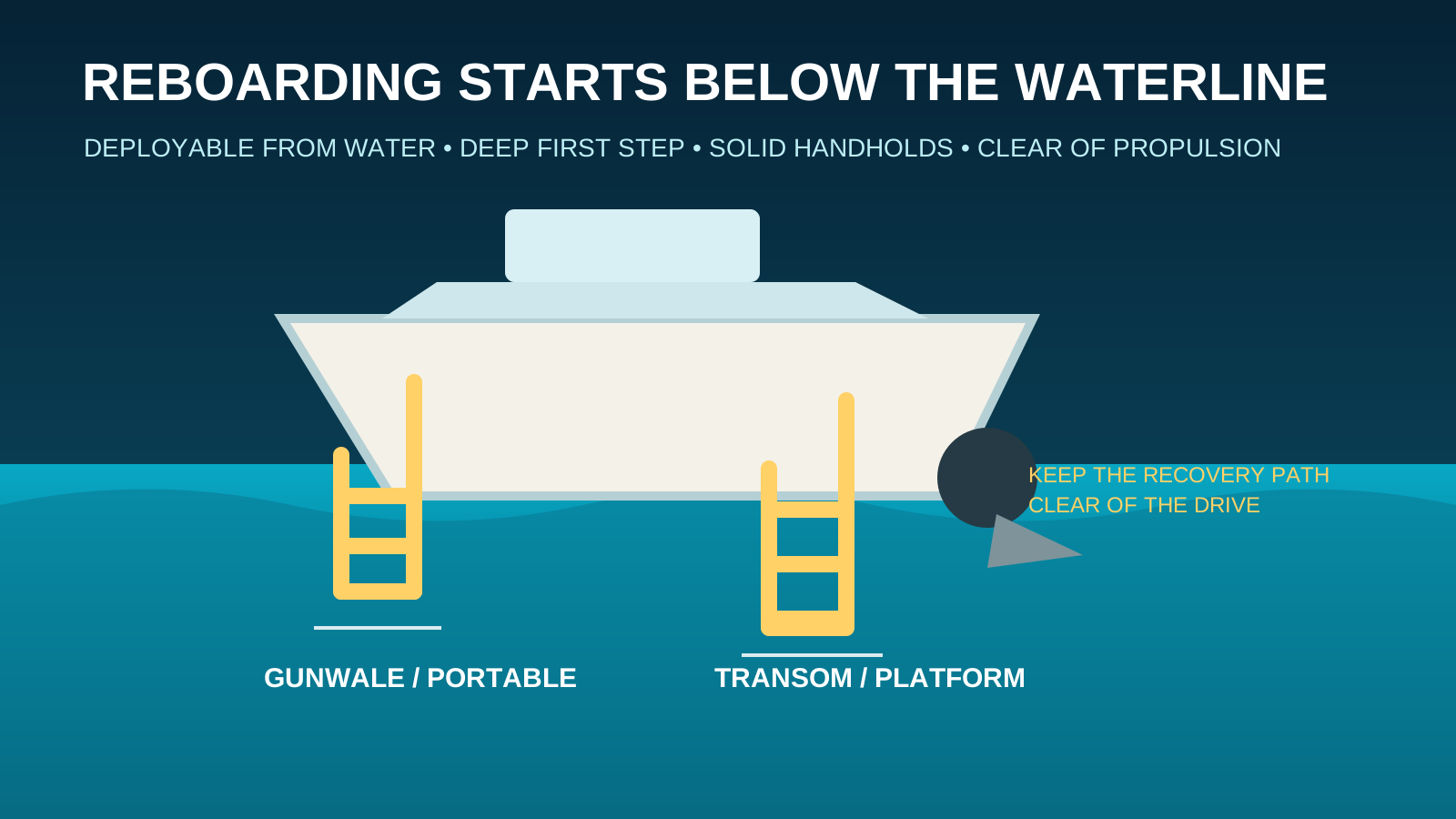
Define the recovery before choosing the hardware
Write down who may need the ladder, whether they could be alone, the likely clothing and flotation, the boat's freeboard, and the safest recovery side with propulsion shut down. A child returning from a swim, an adult in soaked foul-weather gear and an unconscious person are different problems. No ladder solves every one.
The U.S. Coast Guard advises operators to establish rules for swim-platform and ladder use, account for passengers before starting the engine, stop the boat during a person-overboard response and keep people clear of propeller hazards. That makes the recovery sequence part of the purchase. Read the Coast Guard propeller-safety guidance, then pair the ladder with the person-overboard recovery plan.
A ladder selected only for recreational swimming can still be valuable, but label that limitation honestly. If the crew cannot recover its heaviest member using the actual boat, add a separate lifting and assistance plan.
Submerged reach beats advertised rung count
The useful first step must be low enough below the water for a tired person to place a foot without doing a pull-up. Coast Guard grant reporting on the ABYC H-41 revision says the standard was updated to extend reboarding ladders 22 inches below the water surface, partly to reduce propeller-injury exposure. That is a credible benchmark, not permission to assume every product bearing a marine label meets it.
Count the steps that are actually submerged at the boat's loaded waterline. A four-step telescoping ladder mounted high on a platform can offer fewer usable underwater steps than a shorter unit installed lower. Hull trim, passenger loading and platform height change the answer.
Transom and platform ladders: fast access, serious geometry
A permanently mounted transom or swim-platform ladder is usually the most discoverable choice on a runabout or cruiser. It stays with the boat, can deploy quickly and may align with a broad platform. The weakness is location: drives, trim tabs, exhaust outlets, steering components and sharp hardware can crowd the same area.
Confirm that the ladder clears the propeller and drive through their full positions, remains usable with the engine stopped, and does not invite people onto the platform while propulsion is operating. Never start the engine until every swimmer is physically aboard and accounted for. The children-aboard safety guide covers supervision and key control.
Gunwale ladders: useful on open boats, easy to misuse
A gunwale-mounted ladder can put recovery away from an outboard or sterndrive and may suit a skiff, center console or sailboat without a platform. It must fit the exact rail or coaming, land on structure capable of carrying a dynamic person and provide a transition point that does not dump weight onto a windshield, canvas frame or loose seatback.
Portable hook ladders tend to rotate and swing inward as the climber loads them. Stand-off legs must contact an appropriate surface, and the hooks need retention that prevents sliding along the rail. Padding protects gelcoat but cannot make a weak mounting surface structural.
Handholds are half the system
The upper transition is often harder than the submerged climb. A person needs a handhold that stays reachable while the torso moves above the gunwale or platform. A smooth stainless rail can be wet, and a canvas bow is not a structural grip. Test where both hands go on every step.
If the ladder ends below a high coaming, add only manufacturer-supported handholds attached to verified structure. Do not drill near fuel fills, wiring, cored laminate or hidden fasteners without the boat builder's drawings and an installation plan. Water intrusion around a poorly bedded fitting can create damage well beyond the ladder.
The ABYC standards catalog places reboarding means, ladders, handholds, rails and lifelines together in H-41. That grouping is useful editorial guidance: evaluate the path as one system rather than shopping for isolated shiny parts.
Portable and rope ladders are backups with conditions
A compact portable ladder can serve a dinghy, rental boat or secondary recovery station when permanent mounting is unavailable. It must be stored where a person in the water can reach it—or deployed before swimming begins. A ladder inside a latched locker is not self-rescue equipment.
Flexible rope ladders pack small but often kick beneath the hull. They demand more core strength, provide a poor upper transition and can abrade against hardware. Choose rigid stand-offs and wide steps where possible, and test the design with the boat secured. Do not assume a rope ladder is adequate for children, older adults or cold-water recovery.
Installation is a structural decision
A climber loads the ladder away from the hull, creating leverage at the brackets. Thin laminate, unsupported platform edges and mystery backing plates deserve engineering attention. Use the boat and ladder manufacturers' instructions for substrate, fasteners, backing, sealant, torque and corrosion compatibility. A qualified marine technician should inspect any location whose structure is hidden or previously repaired.
Match metals and isolate them as directed to limit corrosion. Keep fasteners and backing accessible for inspection. Do not route the installation through fuel-system spaces, electrical conductors or flotation without manufacturer approval. On a cored panel, sealing the exposed core is essential; squeezing harder on a leaking fastener is not a repair.
Log the product, capacity, mounting details and inspection schedule in the boat records file.
Run the dockside reboarding test
Stop if the ladder shifts, hardware moves, a step traps a foot or the climber cannot finish comfortably. The test is not a stunt and should never occur in current, cold water, traffic or exhaust exposure.
What not to buy—and the no-buy option
- A ladder advertised only by total rung count with no installed underwater measurement.
- A clamp-on model that does not name the supported rail size, load or stand-off geometry.
- A permanent ladder whose mounting instructions cannot be reconciled with the boat's structure.
- A design stored where a person in the water cannot deploy it.
- A stern ladder that forces the climber toward a propeller, exhaust outlet or sharp hardware.
The no-buy option is to validate the system already aboard. If it deploys from the water, reaches adequately below the loaded waterline, has sound hardware and handholds, clears hazards and passes the supervised dock test, maintenance may be more useful than replacement. Clean, lubricate and inspect only as the manufacturer directs.
Frequently asked questions
How far below the water should a boat ladder extend?
Coast Guard reporting on ABYC H-41 describes a revision extending reboarding ladders 22 inches below the water surface. Confirm the current standard, product instructions and actual loaded waterline.
Is a rope ladder good enough for emergency reboarding?
It can be a compact backup, but flexible ladders often swing under the hull and demand more strength. Test the exact ladder in safe conditions and provide rigid steps or stand-offs when possible.
Can I mount a boarding ladder anywhere on the transom?
No. The location must clear propulsion, exhaust, trim hardware and other hazards while attaching to verified structure. Follow both manufacturers and use a qualified marine technician when the substrate is uncertain.
Should a boarding ladder deploy from the water?
A self-recovery ladder should. If it can only be released from aboard, document that limitation and provide another recovery method.
How often should a boarding ladder be tested?
Inspect it before the season and before trips where swimming or recovery is likely, and repeat a controlled deployment test after installation, repair or any impact.